


- Retrait en 2 heures
- Assortiment impressionnant
- Paiement sécurisé
- Toujours un magasin près de chez vous
- Retrait gratuit dans votre magasin Club
- 7.000.0000 titres dans notre catalogue
- Payer en toute sécurité
- Toujours un magasin près de chez vous



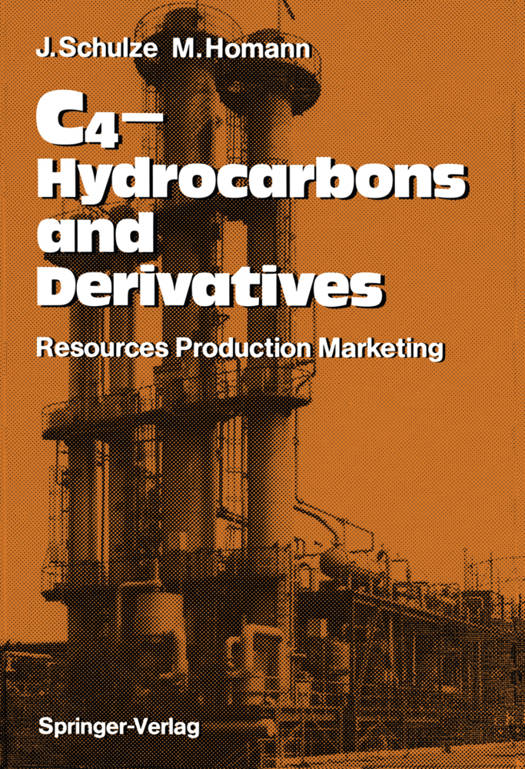
C4-Hydrocarbons and Derivatives
Resources, Production, Marketing
Joachim Schulze, Malte Homann
Livre broché | Anglais
72,59 €
+ 145 points
Description
The book treats the C -hydrocarbons and their secondary products as a contribution 4 to chemical engineering economics, applying this field of teaching and research to the technical processes for making and processing this group of products, so important to the chemical industry. As early as tpe 1950s the then director of the Institute for Technical Chemistry of the Berlin Technical University, Professor Herbert Kolbel, took the' initiative in the domain of Chemical Engineering Economics and began systematic studies of Project Engineering and Cost Estimation in connection with chemical plants. He also started a course on technical chemical processes in 1966. Properties, production procedures, plant equipment, and also the uses of technically interesting products are the central features of Chemical Technology. The information is to be found in the large encyclopedias of Technical Chemistry. On the other hand, Chemical Engineering Economics deals with all the economic conditions of usage of the raw materials, possibilities of utilizing co-products, and the integration of these products into definite production programmes, from the stand- point of the chemical and technical fundamentals of the processes. Further important viewpoints are the costs of the products, taking into consideration important and variable influences on these costs, the situation and development of the market for the products and, of increasing significance, also the ecological global conditions for procuring raw materials and the production and marketing of the particular products.
Spécifications
Parties prenantes
- Auteur(s) :
- Traducteur(s):
- Editeur:
Contenu
- Nombre de pages :
- 239
- Langue:
- Anglais
Caractéristiques
- EAN:
- 9783642738609
- Date de parution :
- 21-12-11
- Format:
- Livre broché
- Format numérique:
- Trade paperback (VS)
- Dimensions :
- 170 mm x 244 mm
- Poids :
- 417 g


Seulement chez Librairie Club
+ 145 points sur votre carte client de Librairie Club

Les avis
Nous publions uniquement les avis qui respectent les conditions requises. Consultez nos conditions pour les avis.