


- Retrait en 2 heures
- Assortiment impressionnant
- Paiement sécurisé
- Toujours un magasin près de chez vous
- Retrait en 2 heures
- Assortiment impressionnant
- Paiement sécurisé
- Toujours un magasin près de chez vous



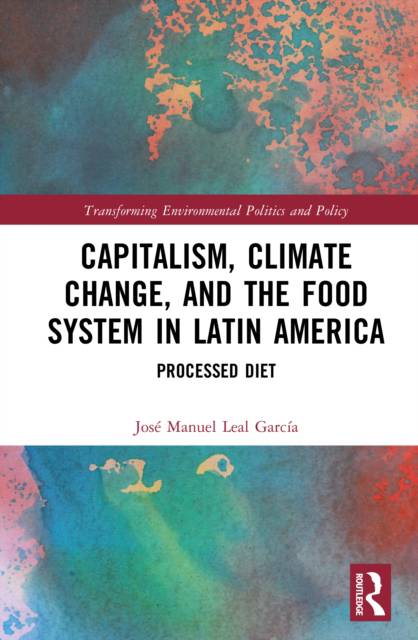
Capitalism, Climate Change, and the Food System in Latin America
Processed Diet
José Manuel Leal García
209,45 €
+ 418 points
Description
Capitalism, Climate Change, and the Food System in Latin America illustrates the relationship between climate change politics and food systems through a critical International Political Economy perspective. Economic globalization has changed our daily habits. Specifically, it has significantly influenced our food and dietary habits. In other words, there is a predominance of economic rationality in our daily activities, including eating. This characteristic contributes to Greenhouse gas emissions (GHG).
This book shows that food is not just about farming or markets. It is also about politics and power. It argues that understanding the political economy of food is key to understanding the relationship between the food system and climate politics. Moreover, the book explains that food policies often look technical, but they reflect choices about who wins and who loses, and they can hide the real complexity of food systems.It considers the political drivers of dietary habits and policies related to the food sector (that contribute to an increase in GHG), and the interrelation between economic growth, capital accumulation, and the cultural meanings of daily practices (e.g., eating and cooking) that connect food production and GHG emissions. By applying the Gramscian concept of hegemony through consent, the book shows how economic rationality contributes to increased GHG emissions in Latin America. The book proposes a new way of conceptualizing world hegemony by moving away from mainstream conceptions that view hegemony as exercised through material power. Furthermore, it discusses climate change politics and shows how it is not only about processes of governance and rule-making, or about power relations, but also about our daily life activities. It argues that power grows not only through relations between states, but also through alliances among social classes, including a transnational capitalist class. Across the chapters, the book shows how economic actors gain consent and expand influence by shaping food policies and food habits. This happens, for example, when policies prioritize certain products and supply chains, promote products linked to market interests, and encourage consumption of new foods in Latin America, including more processed foods.
Capitalism, Climate Change, and the Food System in Latin America will be of great interest to students and scholars of environmental politics, international relations, human geography, food studies, and Latin America, as well as to policymakers in the fields of environmental, economic, and food policy.
Spécifications
Parties prenantes
- Auteur(s) :
- Editeur:
Contenu
- Nombre de pages :
- 184
- Langue:
- Anglais
- Collection :
Caractéristiques
- EAN:
- 9781041078104
- Date de parution :
- 07-08-26
- Format:
- Livre relié
- Format numérique:
- Genaaid
- Dimensions :
- 156 mm x 233 mm


Seulement chez Librairie Club
+ 418 points sur votre carte client de Librairie Club
Cadeau


Les avis
Nous publions uniquement les avis qui respectent les conditions requises. Consultez nos conditions pour les avis.