


- Retrait en 2 heures
- Assortiment impressionnant
- Paiement sécurisé
- Toujours un magasin près de chez vous
- Retrait gratuit dans votre magasin Club
- 7.000.0000 titres dans notre catalogue
- Payer en toute sécurité
- Toujours un magasin près de chez vous




Description
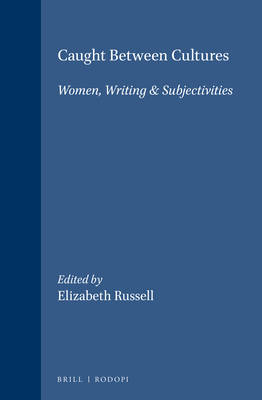
The essays in this collection ( on Canada, the USA, Australia and the UK) question and discuss the issues of cross-cultural identities and the crossing of boundaries, both geographical and conceptual. All of the authors have experienced cross-culturalism directly and are conscious that positions of 'double vision', which allow the / to participate positively in two or more cultures, are privileges that only a few can celebrate. Most women find themselves "caught between cultures". They become involved in a day-to-day struggle, in an attempt to negotiate identities which can affirm the self and, at the same time, strengthen the ties which unites the self with others. Theoretical issues on cross-culturalism, therefore, can either liberate or constrict the /. The essays here illustrate how women's writing negotiates this dualism through a colourful and complex weaving of words - thoughts and experiences both pleasurable and painful - into texts, quilts, rainbows. The metaphors abound. The connecting thread through their writing and, indeed, in these essays, is the concept of 'belonging', a theoretical/emotional composite of be-ing and longing. 'Home', too, assumes a variety of meanings; it is no longer a static geographical place, but many places. It is also a place elsewhere in the imagination, a mythic place of desire linked to origin.
Policies of multiculturalism can throw up more problems than they solve. In Canada, the difficulties surrounding the cross-cultural debate have given rise to a state of "messy imbroglio". Notions of authenticity move dangerously close to essentialist identities. 'Double vision' is characteristic of peoples who have been uprooted and displaced, such as Australian Aboriginal writers of mixed race abducted during childhood. 'Passing for' black or white is full of complications, as in the case of Pauline Johnson, who passed as an authentic Indian. People with hyphenated citizenship (such as Japanese-Canadian) can be either free of national ties or trapped in subordination to the dominant culture; in these 'visible minorities', it is the status of being female (or coloured female) that is so often ultimately rendered invisible.
Examination of Canadian anthologies on cross-cultural writing by women reveals a crossing of boundaries of gender and genre, race and ethnicity, and, in some cases, national boundaries, in an attempt to connect with a diasporic consciousness. Cross-cultural women writers in the USA may stress experience and unique collective history, while others prefer to focus on aesthetic links and literary connections which ultimately silence difference. Journeying from the personal space of the / into the collective space of the we is exemplified in a reading of texts by June Jordan and Minnie Bruce Pratt. For these writers identity is in process. It is a painful negotiation but one which can transform knowledge into action.
Policies of multiculturalism can throw up more problems than they solve. In Canada, the difficulties surrounding the cross-cultural debate have given rise to a state of "messy imbroglio". Notions of authenticity move dangerously close to essentialist identities. 'Double vision' is characteristic of peoples who have been uprooted and displaced, such as Australian Aboriginal writers of mixed race abducted during childhood. 'Passing for' black or white is full of complications, as in the case of Pauline Johnson, who passed as an authentic Indian. People with hyphenated citizenship (such as Japanese-Canadian) can be either free of national ties or trapped in subordination to the dominant culture; in these 'visible minorities', it is the status of being female (or coloured female) that is so often ultimately rendered invisible.
Examination of Canadian anthologies on cross-cultural writing by women reveals a crossing of boundaries of gender and genre, race and ethnicity, and, in some cases, national boundaries, in an attempt to connect with a diasporic consciousness. Cross-cultural women writers in the USA may stress experience and unique collective history, while others prefer to focus on aesthetic links and literary connections which ultimately silence difference. Journeying from the personal space of the / into the collective space of the we is exemplified in a reading of texts by June Jordan and Minnie Bruce Pratt. For these writers identity is in process. It is a painful negotiation but one which can transform knowledge into action.
Spécifications
Parties prenantes
- Auteur(s) :
- Editeur:
Contenu
- Nombre de pages :
- 176
- Langue:
- Anglais
- Collection :
- Tome:
- n° 52
Caractéristiques
- EAN:
- 9789042013681
- Date de parution :
- 01-01-02
- Format:
- Livre broché
- Format numérique:
- Trade paperback (VS)
- Dimensions :
- 155 mm x 230 mm
- Poids :
- 317 g


Seulement chez Librairie Club
+ 41 points sur votre carte client de Librairie Club
Cadeau

Cadeau


Les avis
Nous publions uniquement les avis qui respectent les conditions requises. Consultez nos conditions pour les avis.