


- Retrait en 2 heures
- Assortiment impressionnant
- Paiement sécurisé
- Toujours un magasin près de chez vous
- Retrait en 2 heures
- Assortiment impressionnant
- Paiement sécurisé
- Toujours un magasin près de chez vous



53,45 €
+ 106 points
Passer une commande en un clic
Payer en toute sécurité


Livraison en Belgique: 3,99 €
Livraison en magasin gratuite
Description
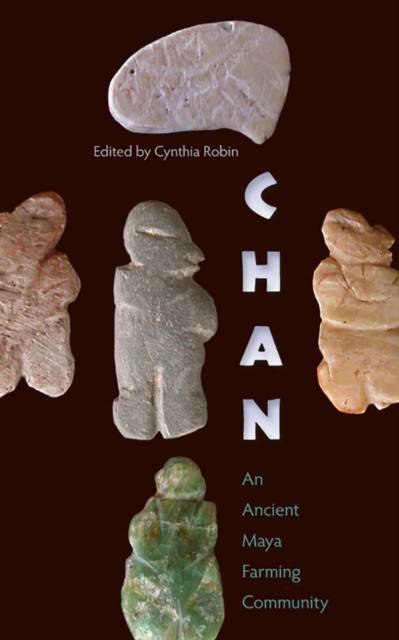
"What stands out in the Chan research is the variability and complexity of the strategies for living in this small community--clearly not the faceless homogeneous masses at the bottom of the socio-economic scale, but a diverse group of people in households who were successful for some 2,000 years in maintaining a balance in the face of a changing political landscape around them"--Heather McKillop, author of In Search of Maya Sea Traders "This book is more than theory-building, it is paradigm-changing. Cynthia Robin and her colleagues have discovered how the farming village of Chan achieved sustainability in the tropics for two thousand years, in contrast to the three cities that emerged nearby but only lasted two hundred years and then collapsed. The successes of Chan in managing their rainforest, soils, population relative to resources, society, and religion embody lessons for today. There is no other book like it, clearly demonstrating from the ground up how a society can adapt to a challenging environment by understanding and respecting it, thereby avoiding the population explosions, environmental degradations and collapses of the competitive big cities."--Payson Sheets, University of Colorado, Boulder The farming community of Chan thrived for over twenty centuries, surpassing the longevity of many larger Maya urban centers. Between 800 BC and 1200 AD it was a major food production center, and this collection of essays reveals the important role played by Maya farmers in the development of ancient Maya society. Chan offers a synthesis of compelling and groundbreaking discoveries gathered over ten years of research at this one archaeological site in Belize. The contributors develop three central themes, which structure the book. They examine how sustainable farming practices maintained the surrounding forest, allowing the community to exist for two millennia. They trace the origins of elite Maya state religion to the complex religious belief system developed in small communities such as Chan. Finally, they describe how the group-focused political strategies employed by local leaders differed from the highly hierarchical strategies of the Classic Maya kings in their large cities. In breadth, methodology, and findings, this volume scales new heights in the study of Maya society and culture. Cynthia Robin is associate professor of anthropology at Northwestern University and assistant curator at the Field Museum in Chicago. She is the coeditor of Gender, Households, and Society.
Spécifications
Parties prenantes
- Auteur(s) :
- Editeur:
Contenu
- Nombre de pages :
- 416
- Langue:
- Anglais
- Collection :
Caractéristiques
- EAN:
- 9780813049632
- Date de parution :
- 17-10-13
- Format:
- Livre broché
- Format numérique:
- Trade paperback (VS)
- Dimensions :
- 156 mm x 234 mm
- Poids :
- 630 g


Seulement chez Librairie Club
+ 106 points sur votre carte client de Librairie Club
Cadeau

Cadeau


Les avis
Nous publions uniquement les avis qui respectent les conditions requises. Consultez nos conditions pour les avis.