

- Retrait en 2 heures
- Assortiment impressionnant
- Paiement sécurisé
- Toujours un magasin près de chez vous
- Retrait gratuit dans votre magasin Club
- 7.000.0000 titres dans notre catalogue
- Payer en toute sécurité
- Toujours un magasin près de chez vous



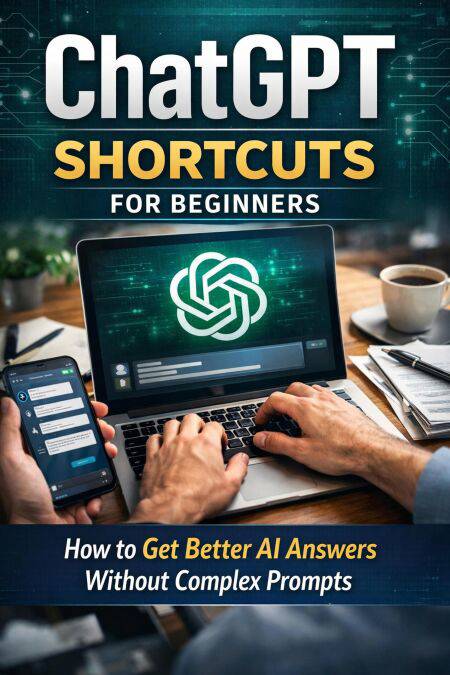
ChatGPT Shortcuts for Beginners: How to Get Better AI Answers Without Complex Prompts EBOOK
Taylor Brooks
Ebook | Anglais
4,49 €
+ 4 points
Description
Many people start using ChatGPT expecting clear, helpful answers, then quickly feel confused when results are inconsistent, vague, or miss the point. This ebook is written for beginners and everyday users who sense that the problem is not the tool itself, but how conversations with AI quietly go off track. It focuses on a common pattern where users assume they need complex prompts or technical knowledge, when small changes in wording, structure, and follow-up matter far more.
ChatGPT Shortcuts for Beginners explains what is actually happening during everyday AI interactions, using clear language and real-world examples rather than technical theory. The book shows why long or complicated prompts often reduce answer quality, how unclear intent leads to generic responses, and why many users unknowingly overload the model with unnecessary detail. These experiences can feel frustrating because the tool sounds confident, yet the output does not feel usable or reliable.
Instead of teaching prompt engineering or rigid formulas, this guide focuses on simple shortcuts that help users get better AI answers without complex prompts. Readers learn how to frame questions more clearly, guide conversations naturally, and recognise when to adjust or reset an interaction. The book breaks down how to ask better AI questions, how to clarify vague responses, and how to improve ChatGPT results using plain language and everyday reasoning.
Practical examples show how these shortcuts apply to common situations such as explaining a problem, refining an idea, comparing options, or asking for help with everyday decisions. Short frameworks and step-by-step approaches demonstrate how to get more useful answers from ChatGPT without feeling overwhelmed or technical. Reflective exercises help readers notice patterns in their own usage and make small changes that increase clarity and confidence.
This ebook is designed for people who want simple ChatGPT tips for beginners, faster AI answers, and practical ways to use AI without frustration. It avoids medical, diagnostic, or therapeutic language and does not promise outcomes or fixes. Instead, it supports skill building, understanding, and better decision-making when using AI in daily life.
Readers looking for ChatGPT shortcuts, beginner AI guidance, help getting better AI answers, or ways to use ChatGPT without complex prompts will find this book practical, calm, and grounded in everyday experience.
Inside this book you will find:
Why ChatGPT answers sometimes feel unhelpful or inconsistent How small wording changes improve AI responses Simple ways to guide conversations without prompt engineering Practical examples for everyday AI use Clear steps to improve ChatGPT results over timeThis guide is for learning how to think with AI more clearly, not for learning technical systems or advanced automation.
Spécifications
Parties prenantes
- Auteur(s) :
- Editeur:
Contenu
- Langue:
- Anglais
Caractéristiques
- EAN:
- 9798233747427
- Date de parution :
- 09-01-26
- Format:
- Ebook
- Protection digitale:
- /
- Format numérique:
- ePub


Seulement chez Librairie Club
+ 4 points sur votre carte client de Librairie Club

Les avis
Nous publions uniquement les avis qui respectent les conditions requises. Consultez nos conditions pour les avis.