


- Retrait en 2 heures
- Assortiment impressionnant
- Paiement sécurisé
- Toujours un magasin près de chez vous
- Retrait en 2 heures
- Assortiment impressionnant
- Paiement sécurisé
- Toujours un magasin près de chez vous



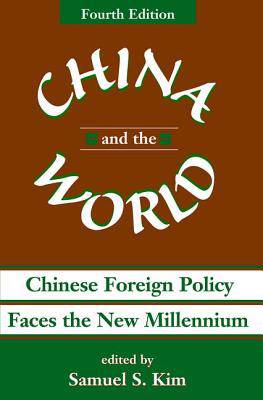
China and the World
Chinese Foreign Policy Faces the New Millennium
Samuel S Kim
Livre broché | Anglais
122,45 €
+ 244 points
Format
Description
As the postwar international system continues its dramatic transformation, the fundamental question of what role China will play is becoming increasingly central. Contributors to the volume focus on the developments of the post-Tiananmen years, addressing the issues raised by China's expanding and increasingly complex relationships with a rapidly changing global environment. They consider such questions as: What is the principal challenge of post-Tiananmen foreign policy? How will China cope with the call for a more peaceful, equitable, democratic, and ecological world order? How has the nexus between China and the world changed in this transition period, and why? What are the implications for China's future and for the future of the rest of the world?Combining a broad theoretical framework with specific case studies, this text tackles themes that have long puzzled Westerners. Seeking the often elusive sources of Chinese foreign policy, the contributors assess the relative influences of domestic and foreign factors in shaping policy goals. They also examine the changes and continuities that have characterized Chinese foreign relations over the years, identifying the patterns underlying China's interactions with the major global actors and its policies on specific international issues. Special attention is paid to the word/deed (and at times word/word) disjuncture in Chinese foreign relations, with several chapters probing the discrepancies between rhetoric and reality, policy pronouncements and policy performance, and intent and outcome. The human-rights component of China's foreign policy and China's foreign policy options for the last decade of the century are also discussed.New to this revised and updated edition of China and the World are discussions concerning Chinese foreign policies and international relations theories, the relationship between China and the Third World, and China's environmental diplomacy.
Spécifications
Parties prenantes
- Auteur(s) :
- Editeur:
Contenu
- Nombre de pages :
- 368
- Langue:
- Anglais
Caractéristiques
- EAN:
- 9780813334141
- Date de parution :
- 03-07-98
- Format:
- Livre broché
- Format numérique:
- Trade paperback (VS)
- Dimensions :
- 153 mm x 229 mm
- Poids :
- 480 g


Seulement chez Librairie Club
+ 244 points sur votre carte client de Librairie Club
Cadeau


Les avis
Nous publions uniquement les avis qui respectent les conditions requises. Consultez nos conditions pour les avis.