


- Retrait en 2 heures
- Assortiment impressionnant
- Paiement sécurisé
- Toujours un magasin près de chez vous
- Retrait en 2 heures
- Assortiment impressionnant
- Paiement sécurisé
- Toujours un magasin près de chez vous



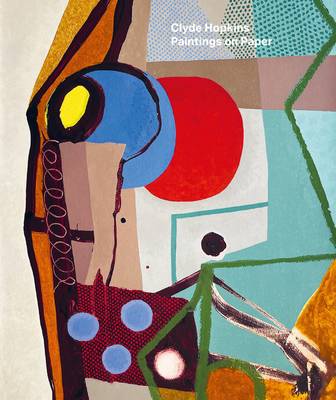
Clyde Hopkins - Paintings on Paper
Joan Key, Matt Lippiatt, David Ryan, David Sweet
Livre broché | Anglais
48,95 €
+ 97 points
Description
Clyde Hopkins (1946-2018) was a British painter whose work occupies a distinctive position within the development of post-war abstraction. His practice moved between gestural intensity and measured structural organization, reflecting a sustained engagement with the material, perceptual, and conceptual conditions of painting. Born in East Sussex and raised in Barrow-in-Furness, Hopkins studied at the University of Reading in the late 1960s, an experience that informed his long-standing commitment to painting as both a rigorous discipline and a broadly accessible form of enquiry. He later served as Professor of Painting at Chelsea College of Arts, where he contributed significantly to the intellectual and pedagogical culture of the institution. Beyond teaching, he played an active role in London's artist-led networks through his involvement in the establishment of Greenwich Studios and, subsequently, APT Studios.
In the politically charged context of the 1980s, Hopkins developed an early visual language characterized by assertive mark-making, looping linear structures, and scaffold-like frameworks. Paintings such as Kent to Yorkshire (via the DT) (1984) exemplify this period, combining references associated with protest imagery, graffiti, and gestural drawing. Hopkins referred to these works as "liquid fields", surfaces in which writing, drawing, and painting were brought into dynamic correspondence.
During the 1990s his compositions evolved towards more considered spatial and chromatic relationships. This development was informed in part by his participation in the Triangle Workshop in New York and by the reflective dimension of his academic life in London. Works including Cap D'Ennis (1990) and Night Crossing (1996) demonstrate an increasing synthesis of structural clarity and nuanced color, while later paintings suggest cartographic or map-like configurations shaped by a more introspective sensibility.
This publication focuses on Hopkins' paintings on paper produced between the early 1980s and the mid-1990s. These works reveal an agile and exploratory approach, allowing for a heightened immediacy distinct from that of his large-scale paintings. They indicate how Hopkins understood drawing and painting as interrelated processes, using improvisation to test formal relationships and to extend the possibilities of abstract language.
"Paintings on Paper" includes a foreword by Greg Rook and a conversation between David Ryan and David Sweet that reflects on Hopkins' development and the range of influences informing his practice. Essays by Matt Lippiatt and Joan Key consider aspects of his technique and the ways in which his work engages with perception and lived experience. Edited by Chloe Green and Greg Rook, and designed by Joe Gilmore, the book is co-published by Anomie Publishing, London, and Blackbird Rook.
In the politically charged context of the 1980s, Hopkins developed an early visual language characterized by assertive mark-making, looping linear structures, and scaffold-like frameworks. Paintings such as Kent to Yorkshire (via the DT) (1984) exemplify this period, combining references associated with protest imagery, graffiti, and gestural drawing. Hopkins referred to these works as "liquid fields", surfaces in which writing, drawing, and painting were brought into dynamic correspondence.
During the 1990s his compositions evolved towards more considered spatial and chromatic relationships. This development was informed in part by his participation in the Triangle Workshop in New York and by the reflective dimension of his academic life in London. Works including Cap D'Ennis (1990) and Night Crossing (1996) demonstrate an increasing synthesis of structural clarity and nuanced color, while later paintings suggest cartographic or map-like configurations shaped by a more introspective sensibility.
This publication focuses on Hopkins' paintings on paper produced between the early 1980s and the mid-1990s. These works reveal an agile and exploratory approach, allowing for a heightened immediacy distinct from that of his large-scale paintings. They indicate how Hopkins understood drawing and painting as interrelated processes, using improvisation to test formal relationships and to extend the possibilities of abstract language.
"Paintings on Paper" includes a foreword by Greg Rook and a conversation between David Ryan and David Sweet that reflects on Hopkins' development and the range of influences informing his practice. Essays by Matt Lippiatt and Joan Key consider aspects of his technique and the ways in which his work engages with perception and lived experience. Edited by Chloe Green and Greg Rook, and designed by Joe Gilmore, the book is co-published by Anomie Publishing, London, and Blackbird Rook.
Spécifications
Parties prenantes
- Auteur(s) :
- Editeur:
Contenu
- Nombre de pages :
- 128
- Langue:
- Anglais
Caractéristiques
- EAN:
- 9781910221747
- Date de parution :
- 16-07-26
- Format:
- Livre broché
- Format numérique:
- Trade paperback (VS)
- Dimensions :
- 210 mm x 248 mm


Seulement chez Librairie Club
+ 97 points sur votre carte client de Librairie Club
Cadeau


Les avis
Nous publions uniquement les avis qui respectent les conditions requises. Consultez nos conditions pour les avis.