


- Retrait en 2 heures
- Assortiment impressionnant
- Paiement sécurisé
- Toujours un magasin près de chez vous
- Retrait gratuit dans votre magasin Club
- 7.000.0000 titres dans notre catalogue
- Payer en toute sécurité
- Toujours un magasin près de chez vous



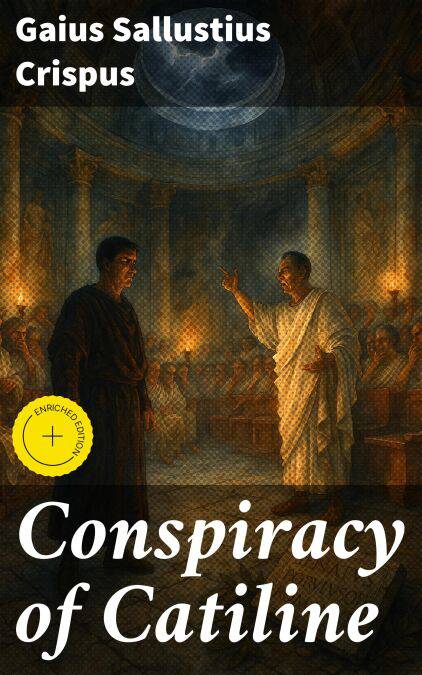
Conspiracy of Catiline EBOOK
Enriched edition. Unraveling Political Intrigue in Ancient Rome: A Historical Account of Corruption, Uprising, and Moral Decay
Gaius Sallustius Crispus
Ebook | Anglais
1,99 €
+ 1 points
Format
Description
In "Conspiracy of Catiline," Gaius Sallustius Crispus, commonly known as Sallust, crafts a riveting narrative that explores the political and moral decay of late Republican Rome through the infamous conspiracy of Lucius Sergius Catilina. Written in a distinctive, terse style, Sallust's work employs a blend of rhetorical eloquence and incisive commentary, reflecting the turbulent political landscape of his time. He delves into themes of ambition, vice, and the fragility of the Republic as he scrutinizes the motives behind Catiline's plot to overthrow the government, presenting historical figures as embodiments of corruption and integrity. Sallust, a contemporary of the events he recounts, was not only a historian but also an active politician, shaped by the chaotic era that saw the decline of Roman democratic ideals. His involvement in politics, coupled with his later embrace of a philosophical worldview, informs his examination of moral corruption, indicating his concern for the Republic he sought to preserve. His firsthand experiences, including a brief imprisonment and his subsequent retirement from political life, imbue his writing with urgency and depth. "Conspiracy of Catiline" is a compelling read for anyone interested in the intricacies of Roman history and the timeless themes of power and betrayal. Sallust's insightful analysis invites readers to reflect on the implications for modern governance and ethics, making this work essential for historians, political theorists, and general readers alike.
In this enriched edition, we have carefully created added value for your reading experience:
- A succinct Introduction situates the work's timeless appeal and themes.
- The Synopsis outlines the central plot, highlighting key developments without spoiling critical twists.
- A detailed Historical Context immerses you in the era's events and influences that shaped the writing.
- An Author Biography reveals milestones in the author's life, illuminating the personal insights behind the text.
- A thorough Analysis dissects symbols, motifs, and character arcs to unearth underlying meanings.
- Reflection questions prompt you to engage personally with the work's messages, connecting them to modern life.
- Hand‐picked Memorable Quotes shine a spotlight on moments of literary brilliance.
- Interactive footnotes clarify unusual references, historical allusions, and archaic phrases for an effortless, more informed read.
In this enriched edition, we have carefully created added value for your reading experience:
- A succinct Introduction situates the work's timeless appeal and themes.
- The Synopsis outlines the central plot, highlighting key developments without spoiling critical twists.
- A detailed Historical Context immerses you in the era's events and influences that shaped the writing.
- An Author Biography reveals milestones in the author's life, illuminating the personal insights behind the text.
- A thorough Analysis dissects symbols, motifs, and character arcs to unearth underlying meanings.
- Reflection questions prompt you to engage personally with the work's messages, connecting them to modern life.
- Hand‐picked Memorable Quotes shine a spotlight on moments of literary brilliance.
- Interactive footnotes clarify unusual references, historical allusions, and archaic phrases for an effortless, more informed read.
Spécifications
Parties prenantes
- Auteur(s) :
- Traducteur(s):
- Editeur:
Contenu
- Nombre de pages :
- 48
- Langue:
- Anglais
Caractéristiques
- EAN:
- 4064066465858
- Date de parution :
- 09-04-21
- Format:
- Ebook
- Protection digitale:
- Digital watermarking
- Format numérique:
- ePub


Seulement chez Librairie Club
+ 1 points sur votre carte client de Librairie Club
Cadeau

Cadeau


Les avis
Nous publions uniquement les avis qui respectent les conditions requises. Consultez nos conditions pour les avis.