


Nous rencontrons actuellement des difficultés pour activer les ebooks. Par conséquent, la mise à disposition des ebooks que vous avez achetés pourrait prendre un peu plus de temps. Vous recevrez automatiquement un message dès que ce sera fait.
- Retrait en 2 heures
- Assortiment impressionnant
- Paiement sécurisé
- Toujours un magasin près de chez vous
Nous rencontrons actuellement des difficultés pour activer les ebooks. Par conséquent, la mise à disposition des ebooks que vous avez achetés pourrait prendre un peu plus de temps. Vous recevrez automatiquement un message dès que ce sera fait.
- Retrait en 2 heures
- Assortiment impressionnant
- Paiement sécurisé
- Toujours un magasin près de chez vous


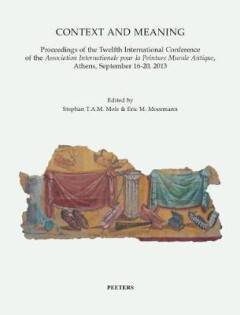
Context and Meaning
Proceedings of the Twelfth International Conference of the Association Internationale Pour La Peinture Murale Antique, Athens, September 16-20, 2013
115,00 €
Description
This volume contains 81 contributions on ancient wall painting presented in the form of papers and posters during the twelfth triennial meeting of the Association Internationale pour la Peinture Murale Antique (AIPMA) held at Athens from September 16 through September 20, 2013. 120 participants were guests of Radboud University Nijmegen and the Ecole Francaise d'Athenes, in collaboration with the Netherlands Institute at Athens, and the National Hellenic Research Foundation. In recent decades there has been a growing interest among researchers in the analysis of paintings in terms of their context rather than as expressions of art in and for itself. Therefore the conference focused on figural themes, and to the iconographical and iconological problems of paintings considered in relation to their specific contexts. Which messages images in wall painting, from the archaic to the late-antique period (ca 700 BC-AD 500) conveyed to contemporary viewers in specific contexts and how were they received? Many contributions in this volume zoom in on the rationale behind the use of specific motifs in wall paintings, the syntax of decorative systems in particular contexts, as well as specific fashions in the use of figural themes in determined areas or sites in the ancient world. Within the series of BABESCH supplements, this book is a sequel to the third one of 1993 which contains the proceedings of the fifth AIPMA conference in Amsterdam. The two editors have carried out extensive research in the field of ancient mural decorations, especially in the context of Roman houses, villas, and temples, and were members of subsequent AIPMA boards. While Eric Moormann was responsible for the organisation of the Amsterdam colloquium in 1992, Stephan Mols organised the Athens conference in 2013, the proceedings of which are presented in this BABESCH supplement. Both Mols and Moormann are members of the Institute for Historical, Literary and Cultural Studies of the Faculty of Arts of Radboud University at Nijmegen, The Netherlands.
Spécifications
Parties prenantes
- Editeur:
Contenu
- Nombre de pages :
- 541
- Langue:
- Anglais
- Collection :
- Tome:
- n° 31
Caractéristiques
- EAN:
- 9789042935297
- Date de parution :
- 31-12-17
- Format:
- Livre broché
- Format numérique:
- Trade paperback (VS)
- Dimensions :
- 211 mm x 269 mm
- Poids :
- 1474 g

Seulement chez Librairie Club
Cadeau


Les avis
Nous publions uniquement les avis qui respectent les conditions requises. Consultez nos conditions pour les avis.