


- Retrait en 2 heures
- Assortiment impressionnant
- Paiement sécurisé
- Toujours un magasin près de chez vous
- Retrait gratuit dans votre magasin Club
- 7.000.0000 titres dans notre catalogue
- Payer en toute sécurité
- Toujours un magasin près de chez vous



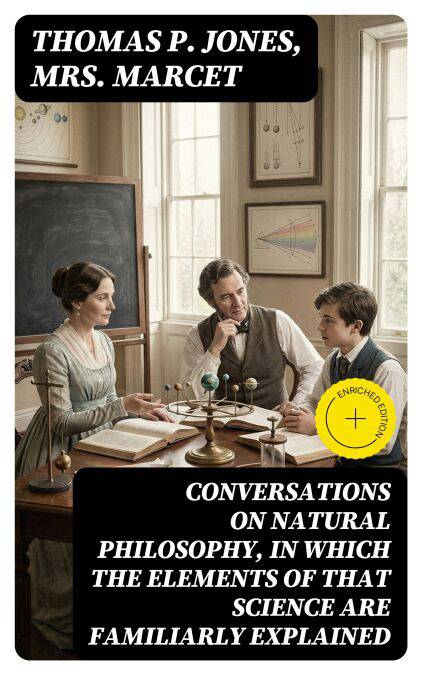
Conversations on Natural Philosophy, in which the Elements of that Science are Familiarly Explained EBOOK
Enriched edition.
Thomas P. Jones, Mrs. Marcet
Ebook | Anglais
0,49 €
Format
Description
In "Conversations on Natural Philosophy, in which the Elements of that Science are Familiarly Explained," readers are invited to traverse the intricate landscapes of early scientific thought, underscored by a robust dialogue that demystifies complex principles. The collection embraces a conversational approach, rendering the abstract tangible through engaging discussion. By blending explanations of natural phenomena with illustrative exchanges, the anthology captures the spirit of inquiry during a transformative era in scientific exploration. Standout sections include vivid portrayals of fundamental concepts that highlight the gravity of scientific discovery in everyday life, making the fundamental tenets of natural philosophy accessible to readers of all backgrounds. The contributors, notably Thomas P. Jones and Mrs. Marcet, are anchored in the rich tradition of nineteenth-century didactic literature, serving as both pioneers and educators of scientific knowledge. Their combined endeavors in elucidating philosophical elements mirror the burgeoning curiosity of their time—a period marked by significant advancements in the natural sciences. This anthology exemplifies a commitment to the democratization of knowledge, where a collective of intellectuals strives to bridge the gap between emerging scientific discourse and the lay audience, thus reflecting the broader educational movements of their era. This collection is an indispensable resource for readers eager to explore the storied intersections of dialogue and discovery. It stands as a testament to the enduring relevance of natural philosophy, capturing the evolving dialogue between human curiosity and scientific understanding. By immersing oneself in these engaging exchanges, readers gain not merely an appreciation of scientific principles but also an insight into the historical context that shaped modern thought. A multifaceted journey into the heart of scientific inquiry, the anthology is a beacon for those seeking to comprehend the richness and depth of early scientific conversations.
In this enriched edition, we have carefully created added value for your reading experience:
- Hand‐picked Memorable Quotes shine a spotlight on moments of literary brilliance.
- Interactive footnotes clarify unusual references, historical allusions, and archaic phrases for an effortless, more informed read.
In this enriched edition, we have carefully created added value for your reading experience:
- Hand‐picked Memorable Quotes shine a spotlight on moments of literary brilliance.
- Interactive footnotes clarify unusual references, historical allusions, and archaic phrases for an effortless, more informed read.
Spécifications
Parties prenantes
- Auteur(s) :
- Editeur:
Contenu
- Nombre de pages :
- 272
- Langue:
- Anglais
Caractéristiques
- EAN:
- 8596547140405
- Date de parution :
- 31-07-22
- Format:
- Ebook
- Protection digitale:
- Digital watermarking
- Format numérique:
- ePub


Seulement chez Librairie Club
Cadeau

Cadeau


Les avis
Nous publions uniquement les avis qui respectent les conditions requises. Consultez nos conditions pour les avis.