


- Retrait en 2 heures
- Assortiment impressionnant
- Paiement sécurisé
- Toujours un magasin près de chez vous
- Retrait en 2 heures
- Assortiment impressionnant
- Paiement sécurisé
- Toujours un magasin près de chez vous



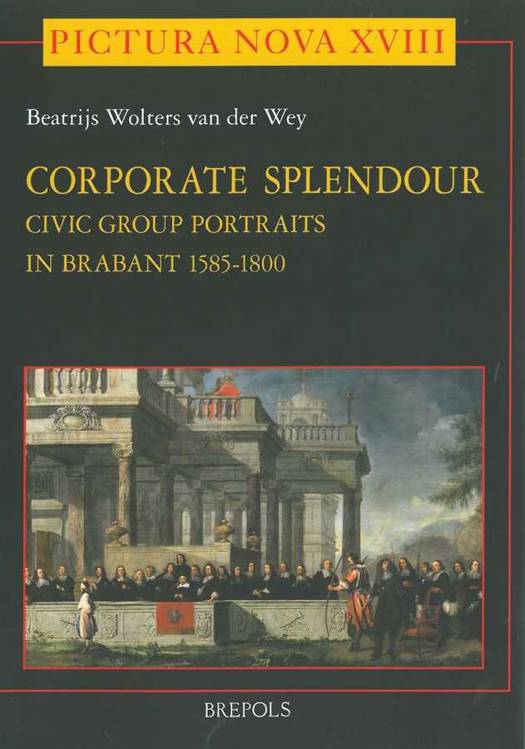
Corporate Splendour. Civic Group Portraits in Brabant 1585-1800
A Social, Typological, and Iconographic Approach
Beatrijs Wolters Van Der Wey
217,30 €
+ 434 points
Description
Civic group portraits, depicting trades and guilds, militias, magistrates, governors of charitable institutions and confraternities, were in the old duchy of Brabant during the Ancien Regime much better represented than is generally thought. Some hundred paintings are revealed, especially in the cities of Antwerp, Brussels, Leuven and Mechelen. For the first time, the book zooms in on this important subgenre of Flemish portraiture. The paintings present a wide variety of compositional types and integrated iconographic elements. Monumental life-size portraits coexist with small scale representations. At the same time, there is a clear differentiation in typology according to the city where they were produced. Along with the formal analysis, attention is paid to the material-technical genesis of these compositions, combining in some cases visual observation with scientific imagery and archival evidence. Also the question why patrons would order a group portrait, and how to interpret such 'corporate splendour', is dealt with, making use of the richly collected contemporary documents, which permit to contextualize the portraits and, in some cases, reconstruct their original habitat. They thus shed light on a number of factors that were involved in the realization of Brabantine civic group portraits: the type of patrons and their socio-economic and political position; the immediate cause for ordering a group portrait; the artists called upon; the prices and terms of payment; and the destination - (semi)public / private, sacral / secular - of the paintings.
Spécifications
Parties prenantes
- Auteur(s) :
- Editeur:
Contenu
- Nombre de pages :
- 507
- Langue:
- Anglais
- Collection :
- Tome:
- n° 18
Caractéristiques
- EAN:
- 9782503550374
- Date de parution :
- 02-09-15
- Format:
- Livre relié
- Format numérique:
- Genaaid
- Dimensions :
- 196 mm x 257 mm
- Poids :
- 1632 g



Seulement chez Librairie Club
+ 434 points sur votre carte client de Librairie Club
Cadeau


Les avis
Nous publions uniquement les avis qui respectent les conditions requises. Consultez nos conditions pour les avis.