


- Retrait en 2 heures
- Assortiment impressionnant
- Paiement sécurisé
- Toujours un magasin près de chez vous
- Retrait en 2 heures
- Assortiment impressionnant
- Paiement sécurisé
- Toujours un magasin près de chez vous



174,45 €
+ 348 points
Passer une commande en un clic
Payer en toute sécurité


Livraison en Belgique: 3,99 €
Livraison en magasin gratuite
Description
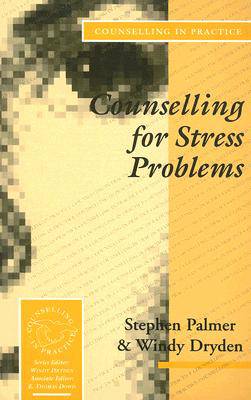
"This is an excellent and well-thought-out book that reflects the authors′ knowledge of this area. It will be of value to practitioners working towards being technically eclectic and I would agree with the authors that even for readers who do not wish to subscribe to this approach, the book serves to encourage and stimulate understanding of stress management from a multimodal perspective. For the price it provides a wealth of information, and I found the references to case study material throughout the book particularly useful." --BPS Counselling Psychology Review "The main sections of Counseling for Stress Problems . . . contain concise, practical descriptions of numerous techniques which could be used by most counselors in their own style. I particularly liked the emphasis on contra-indications for each technique. They are a convenient and compact resource, and the authors′ professional and responsible treatment of the techniques is a further strength." --Rowan Bayne in Psychology Teaching Review "This book is a new and welcome addition to the "Counselling in Practice" series. The co-authors, well known to this journal, have endeavored to give a thorough and practical guide to this vast subject and they have managed to do this within the confines of an easy to read, cheap and relatively short paperback." --Suzanna Rose in Counselling "The most remarkable aspect of this book is that the authors clearly demonstrate how to employ a wide range of therapeutic interventions for stress related problems in a rational and flexible manner. Useful techniques such as disputing irrational beliefs, coping imagery, behavioural rehearsal and assertion training are well described and case examples illustrate their application in the therapeutic context... This s a very good book that can be used as a handbook of multimodal techniques and is well recommended both to students and to mental health professionals at all levels." --Ligia M. Oto in Behavior Research & Therapy Clear and accessible, Counseling for Stress Problems shows practitioners how they can give their clients the most effective help using a technically eclectic and systematic approach. The authors discuss the symptoms and causes of stress, and outline a framework from which stress problems can be easily understood and assessed. They emphasize the importance of assessment and provide a useful guide to the selection of multimodal interventions and encourage the practice of tailoring one′s counseling approach to the specific problems of each client. They also discuss the range of interventions that can be used--cognitive, imagery, behavioral, sensory, and interpersonal--and the most useful techniques that can be employed within these models, such as disputing irrational beliefs, coping imagery, psychodrama, relaxation training, and assertion training. Case examples from the authors′ own practices illustrate commonly used techniques in action. Counseling for Stress takes a pragmatic and empirical approach to stress counseling and provides an invaluable guide for psychotherapists, counseling and health psychologists, and counselors-in-training.
Spécifications
Parties prenantes
- Auteur(s) :
- Editeur:
Contenu
- Nombre de pages :
- 262
- Langue:
- Anglais
- Collection :
Caractéristiques
- EAN:
- 9780803988637
- Date de parution :
- 21-01-21
- Format:
- Livre broché
- Format numérique:
- Trade paperback (VS)
- Dimensions :
- 139 mm x 215 mm
- Poids :
- 340 g


Seulement chez Librairie Club
+ 348 points sur votre carte client de Librairie Club
Cadeau

Cadeau


Les avis
Nous publions uniquement les avis qui respectent les conditions requises. Consultez nos conditions pour les avis.