


- Retrait en 2 heures
- Assortiment impressionnant
- Paiement sécurisé
- Toujours un magasin près de chez vous
- Retrait en 2 heures
- Assortiment impressionnant
- Paiement sécurisé
- Toujours un magasin près de chez vous



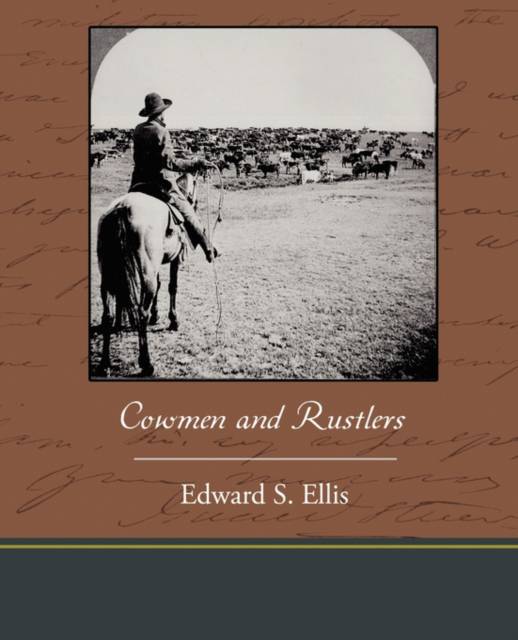
Description
Edward Ellis (1840 - 1916) was an American journalist, school administrator and author. He wrote many dime novels. He specialized in boys' stories, inspirational biography, and history for both children and adults. Dime novels had come into fashion. They were small books that were inexpensive to buy and easy to carry. Cowmen and Rustlers is a classic western set on the Wyoming cattle range. An excerpt reads, "What shall we do?" asked Fred; "we cannot push on; let's go up stream." " You cannot do that," replied Jennie, "for they are gathering behind us." A glance in that direction showed that she spoke the truth. It looked as if a few minutes would bring as many there as in advance. " We shall have to take to the woods," said Fred, " and there's little hope there." " It won't do," added the sister, who seemed to be thinking faster than either of her companions. " The instant we start for the shore they will be at our heels. Make as if we were going to run in close to the right bank, so as to draw them after us; then turn and dash through them." The manoeuvre was a repetition of the one she and her brother had executed a few minutes before, and was their only hope. " I will take the lead with my pistol," said Monteith, " while you keep as close to me as you can." Every second was beyond value. The wolves were not the creatures to remain idle while a conference was under way. At sight of the three figures near the middle of the course they rent the air with howls, and came trotting toward them with that light, springy movement shown by a gaunt hound, to whom the gait is as easy as a walk. Monteith Sterry shot forward on his right foot, his revolver, with its two precious charges, tightly gripped in his naked hand. This was to be called into play only in the last extremity. The killing of a couple of wolves from such a horde could produce no effect upon the rest, unless perhaps to furnish some of them a lunch."
Spécifications
Parties prenantes
- Auteur(s) :
- Editeur:
Contenu
- Nombre de pages :
- 174
- Langue:
- Anglais
Caractéristiques
- EAN:
- 9781438533100
- Date de parution :
- 31-12-09
- Format:
- Livre broché
- Format numérique:
- Trade paperback (VS)
- Dimensions :
- 190 mm x 235 mm
- Poids :
- 308 g


Seulement chez Librairie Club
+ 54 points sur votre carte client de Librairie Club
Cadeau


Les avis
Nous publions uniquement les avis qui respectent les conditions requises. Consultez nos conditions pour les avis.