


- Retrait en 2 heures
- Assortiment impressionnant
- Paiement sécurisé
- Toujours un magasin près de chez vous
- Retrait gratuit dans votre magasin Club
- 7.000.0000 titres dans notre catalogue
- Payer en toute sécurité
- Toujours un magasin près de chez vous



83,95 €
+ 167 points
Description
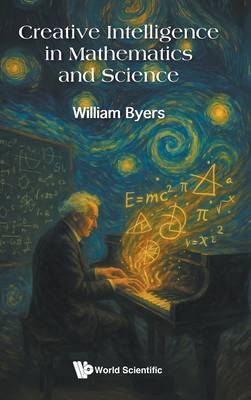
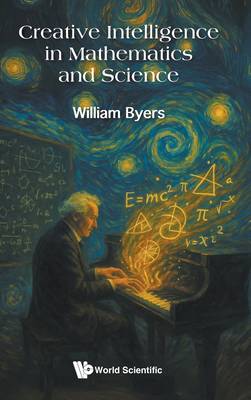
This book is about creativity and intelligence and the way they arise in mathematics and science. Creativity and intelligence are intimately connected; they are two facets of what the book calls creative intelligence. When creative intelligence manifests in mathematics and science, it is referred to as deep thinking. Thus, this book is an elaboration of the earlier book Deep Thinking. Creative intelligence involves both conscious and non-conscious elements, differing from systematic, rule-based thinking found in mathematical proof or computer programs. It is the thinking behind breakthroughs in mathematics, paradigm changes in science, and conceptual learning.Sources include the cognitive development of number in children, neuropsychology, and the historical development of mathematics and science. The approach is original, drawing from the author's experience as a mathematician, philosopher, teacher, and writer.This leads to a new view of mathematics and science as processes of human creative expression rather than rigid theoretical edifices. Mathematics is seen as conceptual, structured around the 'Conceptual System.' Science and technologies are understood through the conceptual systems they create. Deep thinking is revealed by how one conceptual system morphs into another across fields.This approach opens a new perspective on education as the unfolding of student creative intelligence, and on Artificial Intelligence. AI is seen as intelligent and creative but not conscious. Yet it shares many characteristics with creative intelligence, which is shown to be universal and present not only in human creativity but also in the evolution of life and the structure of the physical universe itself.
Spécifications
Parties prenantes
- Auteur(s) :
- Editeur:
Contenu
- Nombre de pages :
- 292
- Langue:
- Anglais
Caractéristiques
- EAN:
- 9789819819133
- Date de parution :
- 24-12-25
- Format:
- Livre relié
- Format numérique:
- Genaaid


Seulement chez Librairie Club
+ 167 points sur votre carte client de Librairie Club

Les avis
Nous publions uniquement les avis qui respectent les conditions requises. Consultez nos conditions pour les avis.