


- Retrait en 2 heures
- Assortiment impressionnant
- Paiement sécurisé
- Toujours un magasin près de chez vous
- Retrait gratuit dans votre magasin Club
- 7.000.0000 titres dans notre catalogue
- Payer en toute sécurité
- Toujours un magasin près de chez vous



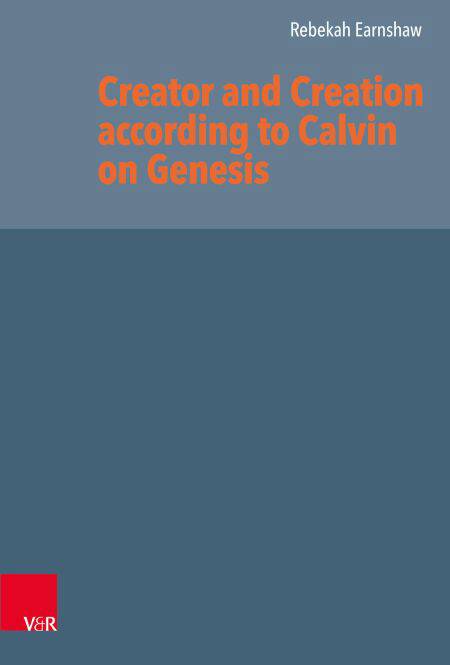
Creator and Creation according to Calvin on Genesis EBOOK
Rebekah Earnshaw
85,00 €
+ 85 points
Format
Description
In her work Rebekah Earnshaw provides an analysis of Creator and creation according to Calvin on Genesis. This offers a new theological reading of Calvin's Genesis commentary and sermons, with an eye to systematic interests.
This analysis is presented in four chapters: The Creator, The Agent and Act of Creation, Creatures, and Providence. Calvin on Genesis gives unique insights into each of these. First, the Creator has priority in Calvin's thought. The Creator is l'Eternal, who is infinitely distinct and abundantly for creatures in his virtues. Second, the agent of creation is triune and the act of creation is "from nothing" as well as in and with time. This is a purposeful beginning. Third, Calvin affirms creaturely goodness and order. The relation of humans and animals illustrates Calvin's holistic view of creation as well as the impact of corruption and disorder. Providential sustenance and concursus are closely tied to the nature of creatures and the initial word. Fourth, fatherly governance for the church is presented separately and demonstrated by Calvin's treatment of Abraham and Joseph.
Earlier presentations of Calvin on Creator and creation are incomplete, because of the lack of sustained attention to Calvin on Genesis. This analysis supplements works that concentrated on the Institutes and Calvin on Job, by bringing new material to bear. Further, throughout this analysis lies the implicit example of a biblical theologian, who pursues what is useful from scripture for the sake of piety in the church.
Insights from Calvin's thought on Genesis provide a foundation for systematic work that reflects on this locus and the integrated practice of theology.
This analysis is presented in four chapters: The Creator, The Agent and Act of Creation, Creatures, and Providence. Calvin on Genesis gives unique insights into each of these. First, the Creator has priority in Calvin's thought. The Creator is l'Eternal, who is infinitely distinct and abundantly for creatures in his virtues. Second, the agent of creation is triune and the act of creation is "from nothing" as well as in and with time. This is a purposeful beginning. Third, Calvin affirms creaturely goodness and order. The relation of humans and animals illustrates Calvin's holistic view of creation as well as the impact of corruption and disorder. Providential sustenance and concursus are closely tied to the nature of creatures and the initial word. Fourth, fatherly governance for the church is presented separately and demonstrated by Calvin's treatment of Abraham and Joseph.
Earlier presentations of Calvin on Creator and creation are incomplete, because of the lack of sustained attention to Calvin on Genesis. This analysis supplements works that concentrated on the Institutes and Calvin on Job, by bringing new material to bear. Further, throughout this analysis lies the implicit example of a biblical theologian, who pursues what is useful from scripture for the sake of piety in the church.
Insights from Calvin's thought on Genesis provide a foundation for systematic work that reflects on this locus and the integrated practice of theology.
Spécifications
Parties prenantes
- Auteur(s) :
- Editeur:
Contenu
- Nombre de pages :
- 229
- Langue:
- Anglais
- Collection :
Caractéristiques
- EAN:
- 9783647540832
- Date de parution :
- 12-07-20
- Format:
- Ebook
- Protection digitale:
- /
- Format numérique:


Seulement chez Librairie Club
+ 85 points sur votre carte client de Librairie Club
Cadeau

Cadeau


Les avis
Nous publions uniquement les avis qui respectent les conditions requises. Consultez nos conditions pour les avis.