


- Retrait en 2 heures
- Assortiment impressionnant
- Paiement sécurisé
- Toujours un magasin près de chez vous
- Retrait en 2 heures
- Assortiment impressionnant
- Paiement sécurisé
- Toujours un magasin près de chez vous



Description
This book contains several tables of HTML content to make reading easier.
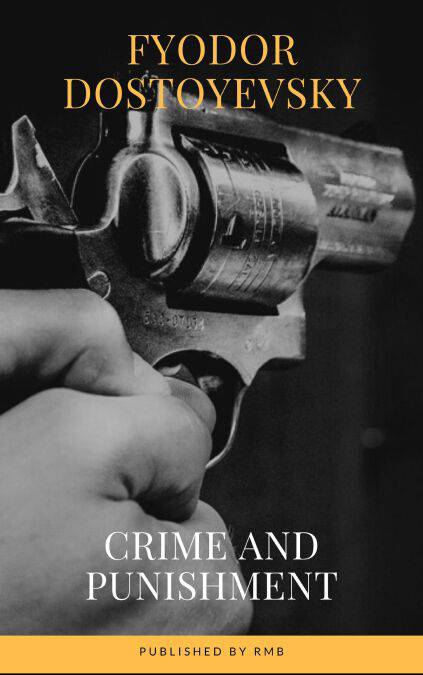
Through the story of the brilliant but conflicted young Raskolnikov and the murder he commits, Fyodor Dostoyevsky explores the theme of redemption through suffering. "Crime and Punishment" put Dostoyevsky at the forefront of Russian writers when it appeared in 1866 and is now one of the most famous and influential novels in world literature.
The poverty-stricken Raskolnikov, a talented student, devises a theory about extraordinary men being above the law, since in their brilliance they think "new thoughts" and so contribute to society. He then sets out to prove his theory by murdering a vile, cynical old pawnbroker and her sister. The act brings Raskolnikov into contact with his own buried conscience and with two characters — the deeply religious Sonia, who has endured great suffering, and Porfiry, the intelligent and discerning official who is charged with investigating the murder — both of whom compel Raskolnikov to feel the split in his nature. Dostoyevsky provides readers with a suspenseful, penetrating psychological analysis that goes beyond the crime — which in the course of the novel demands drastic punishment — to reveal something about the human condition: The more we intellectualize, the more imprisoned we become.
"Dostoyevsky gives me more than any scientist, more than Gauss." —Albert Einstein
"Dostoyevsky wrote of the unconscious as if it were conscious; that is in reality the reason why his characters seem 'pathological', while they are only visualized more clearly than any other figures in imaginative literature... He was in the rank in which we set Dante, Shakespeare and Goethe." —Edwin Muir
"The greatest crime novel of all time." —Thomas Mann
"'Crime and Punishment' remains the best of all murder stories, a century and a third after its publication. We have to read it — though it is harrowing — because, like Shakespeare, it alters our consciousness." —Harold Bloom
Through the story of the brilliant but conflicted young Raskolnikov and the murder he commits, Fyodor Dostoyevsky explores the theme of redemption through suffering. "Crime and Punishment" put Dostoyevsky at the forefront of Russian writers when it appeared in 1866 and is now one of the most famous and influential novels in world literature.
The poverty-stricken Raskolnikov, a talented student, devises a theory about extraordinary men being above the law, since in their brilliance they think "new thoughts" and so contribute to society. He then sets out to prove his theory by murdering a vile, cynical old pawnbroker and her sister. The act brings Raskolnikov into contact with his own buried conscience and with two characters — the deeply religious Sonia, who has endured great suffering, and Porfiry, the intelligent and discerning official who is charged with investigating the murder — both of whom compel Raskolnikov to feel the split in his nature. Dostoyevsky provides readers with a suspenseful, penetrating psychological analysis that goes beyond the crime — which in the course of the novel demands drastic punishment — to reveal something about the human condition: The more we intellectualize, the more imprisoned we become.
"Dostoyevsky gives me more than any scientist, more than Gauss." —Albert Einstein
"Dostoyevsky wrote of the unconscious as if it were conscious; that is in reality the reason why his characters seem 'pathological', while they are only visualized more clearly than any other figures in imaginative literature... He was in the rank in which we set Dante, Shakespeare and Goethe." —Edwin Muir
"The greatest crime novel of all time." —Thomas Mann
"'Crime and Punishment' remains the best of all murder stories, a century and a third after its publication. We have to read it — though it is harrowing — because, like Shakespeare, it alters our consciousness." —Harold Bloom
Spécifications
Parties prenantes
- Auteur(s) :
- Traducteur(s):
- Editeur:
Contenu
- Nombre de pages :
- 206
- Langue:
- Anglais
Caractéristiques
- EAN:
- 9782380372823
- Date de parution :
- 13-06-20
- Format:
- Ebook
- Protection digitale:
- Digital watermarking
- Format numérique:
- ePub



Seulement chez Librairie Club
Cadeau


Les avis
Nous publions uniquement les avis qui respectent les conditions requises. Consultez nos conditions pour les avis.