


- Retrait en 2 heures
- Assortiment impressionnant
- Paiement sécurisé
- Toujours un magasin près de chez vous
- Retrait en 2 heures
- Assortiment impressionnant
- Paiement sécurisé
- Toujours un magasin près de chez vous



177,45 €
+ 354 points
Description
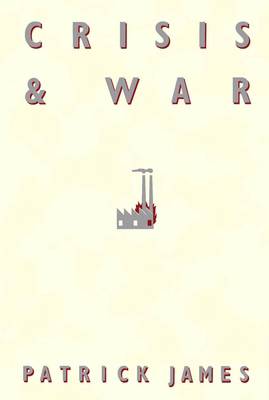
Using an analysis of patterns of international crisis and war from 1948 to 1975, Patrick James suggests why some international crises result in war while others do not. Over one hundred cases are used to assess the three most prominent explanations for crisis escalation to war: (1) war is the result of rational choice by leaders who expect to gain from it; (2) war is the product of the outward projection of political unrest within states; and (3) war is the result of classical balance of power politics. James concludes that the best explanations for war include elements from all three categories.
His analysis suggests that certain explanations have not been sufficiently considered in previous works. For example, prior domestic strife can be linked to the escalation of foreign conflict in an impressive number of cases, a discovery which runs counter to the consensus which has emerged over the last two decades among political scientists. Prior research on causes of war has often lacked rigour. James has tried to remedy this through a long-term, comparative approach to the subject matter. While Crisis and War follows the tradition of aggregate research, statistical analysis is always connected to particular events through discussions of situations and leaders in both diplomatic history and contemporary world politics. James' comprehensive and original approach to past theories both clarifies and critiques them.Spécifications
Parties prenantes
- Auteur(s) :
- Editeur:
Contenu
- Nombre de pages :
- 344
- Langue:
- Anglais
Caractéristiques
- EAN:
- 9780773505742
- Date de parution :
- 01-03-88
- Format:
- Livre relié
- Format numérique:
- Genaaid
- Dimensions :
- 152 mm x 229 mm
- Poids :
- 426 g


Seulement chez Librairie Club
+ 354 points sur votre carte client de Librairie Club
Cadeau


Les avis
Nous publions uniquement les avis qui respectent les conditions requises. Consultez nos conditions pour les avis.