


- Retrait en 2 heures
- Assortiment impressionnant
- Paiement sécurisé
- Toujours un magasin près de chez vous
- Retrait en 2 heures
- Assortiment impressionnant
- Paiement sécurisé
- Toujours un magasin près de chez vous



41,95 €
+ 83 points
Description
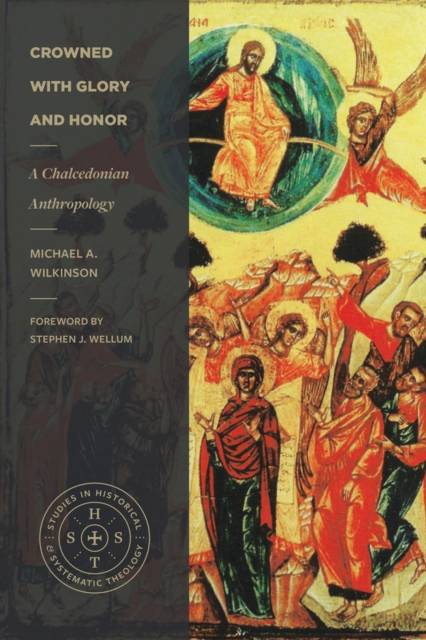
Jesus defines what it means to be human.
What are we as human beings? That question might seem simple and obvious, until you start trying to answer it. The church has always had a default teaching on human ontology, but not an orthodox confession. And the current debate regarding the "what" of human being seems to be locked in a stalemate between dualist and physicalist perspectives on body and soul, which is unable to provide a foundation to address the deeply anthropological issues of our day.
In Crowned with Glory and Honor: A Chalcedonian Anthropology, Michael A. Wilkinson departs from the current debate and argues that our human being is defined by the incarnation of the divine Son as the man Jesus Christ. While there is a growing recognition that Christology should inform anthropology, the key to Wilkinson's argument is the analogical extension of Christ's person-nature constitution as confessed in the Chalcedonian Definition.
Christ alone is fully God and fully man. Yet a fundamental analogy exists between him and each of us because Christ is the paradigm for all things universally human. Wilkinson demonstrates that we have biblical, epistemological, and historical warrant for defining human being in Christ. Scripture gives us good reason to expect a constitutional correspondence between the man and mere man. A robust Christological method helps us explore that correspondence with care. And Chalcedon gives us the terms and concepts that we should extend from Christ's human ontology to ours.
Such a "Chalcedonian anthropology" offers a foundation and framework for an orthodox anthropology. Defining human being in Christ would allow the church to answer the anthropological questions of our day with the help of a rich Christological tradition. And formulating a biblical-theological correspondence between Christ's human ontology and ours holds promise for greater consistency and cogency at the intersection of Christology, anthropology, and soteriology.
What are we as human beings? That question might seem simple and obvious, until you start trying to answer it. The church has always had a default teaching on human ontology, but not an orthodox confession. And the current debate regarding the "what" of human being seems to be locked in a stalemate between dualist and physicalist perspectives on body and soul, which is unable to provide a foundation to address the deeply anthropological issues of our day.
In Crowned with Glory and Honor: A Chalcedonian Anthropology, Michael A. Wilkinson departs from the current debate and argues that our human being is defined by the incarnation of the divine Son as the man Jesus Christ. While there is a growing recognition that Christology should inform anthropology, the key to Wilkinson's argument is the analogical extension of Christ's person-nature constitution as confessed in the Chalcedonian Definition.
Christ alone is fully God and fully man. Yet a fundamental analogy exists between him and each of us because Christ is the paradigm for all things universally human. Wilkinson demonstrates that we have biblical, epistemological, and historical warrant for defining human being in Christ. Scripture gives us good reason to expect a constitutional correspondence between the man and mere man. A robust Christological method helps us explore that correspondence with care. And Chalcedon gives us the terms and concepts that we should extend from Christ's human ontology to ours.
Such a "Chalcedonian anthropology" offers a foundation and framework for an orthodox anthropology. Defining human being in Christ would allow the church to answer the anthropological questions of our day with the help of a rich Christological tradition. And formulating a biblical-theological correspondence between Christ's human ontology and ours holds promise for greater consistency and cogency at the intersection of Christology, anthropology, and soteriology.
Spécifications
Parties prenantes
- Auteur(s) :
- Editeur:
Contenu
- Nombre de pages :
- 408
- Langue:
- Anglais
- Collection :
Caractéristiques
- EAN:
- 9781683597308
- Date de parution :
- 06-03-24
- Format:
- Livre broché
- Format numérique:
- Trade paperback (VS)
- Dimensions :
- 152 mm x 226 mm
- Poids :
- 539 g


Seulement chez Librairie Club
+ 83 points sur votre carte client de Librairie Club
Cadeau


Les avis
Nous publions uniquement les avis qui respectent les conditions requises. Consultez nos conditions pour les avis.