


- Retrait en 2 heures
- Assortiment impressionnant
- Paiement sécurisé
- Toujours un magasin près de chez vous
- Retrait en 2 heures
- Assortiment impressionnant
- Paiement sécurisé
- Toujours un magasin près de chez vous



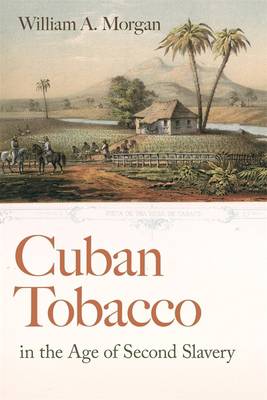
Description
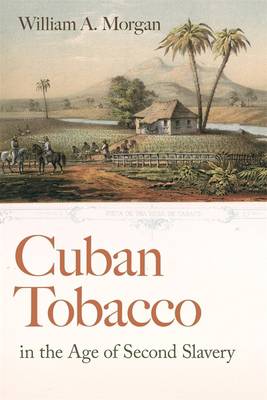
By 1865, more than 750,000 enslaved Africans had arrived in Cuba, making it the leading Spanish American slave colony and the epicenter of slavery in the Atlantic. At the height of the global tobacco economy, tens of thousands of these slaves labored in Pinar del Río, Cuba--a region devoted exclusively to tobacco cultivation. These enslaved people were responsible for exporting a record fourteen million pounds of raw tobacco per year, leaving one contemporary writer to argue that no agricultural economy produced more value, in proportion to the capital and labor employed, than tobacco. While tobacco was second only to sugar in export significance and in the number of rural enslaved, tobacco was unequivocally as dependent on enslaved labor as the more infamous export. Despite Cuba being one of the first-introduced and last-abolished slave societies in the Atlantic world, this slave economy remains largely ignored, existing outside the considerable and recent scholarship on the region.
Cuban Tobacco in the Age of Second Slavery directly refutes the myth of tobacco as a small-scale, family, and free-labor crop promoted by both contemporary and current scholarship. It also rejects the prevailing use of sugar as the model for epitomizing Cuban slavery--a paradigm that obscures the full measure of diversity in this region and era. Arguing tobacco was more counterpart than counterpoint to sugar, Cuban Tobacco in the Age of Second Slavery focuses on the development of tobacco as a plantation economy--and the exponential increase in forced labor supporting it--to suggest an alternative narrative in understanding both Cuban and Atlantic slavery in this period.Spécifications
Parties prenantes
- Auteur(s) :
- Editeur:
Contenu
- Nombre de pages :
- 300
- Langue:
- Anglais
- Collection :
Caractéristiques
- EAN:
- 9780820376929
- Date de parution :
- 15-06-26
- Format:
- Livre relié
- Format numérique:
- Genaaid
- Dimensions :
- 152 mm x 229 mm
- Poids :
- 571 g


Seulement chez Librairie Club
+ 440 points sur votre carte client de Librairie Club
Cadeau


Les avis
Nous publions uniquement les avis qui respectent les conditions requises. Consultez nos conditions pour les avis.