


- Retrait en 2 heures
- Assortiment impressionnant
- Paiement sécurisé
- Toujours un magasin près de chez vous
- Retrait en 2 heures
- Assortiment impressionnant
- Paiement sécurisé
- Toujours un magasin près de chez vous



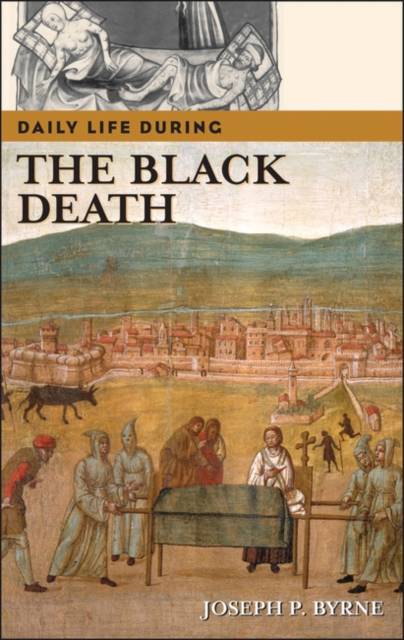
Daily Life During the Black Death
Joseph P Byrne
135,95 €
+ 271 points
Description
Daily life during the Black Death was anything but normal. When plague hit a community, every aspect of life was turned upside down, from relations within families to its social, political, and economic stucture. Theaters emptied, graveyards filled, and the streets were ruled by the terrible corpse-bearers whose wagons of death rumbled day and night.
Daily life during the Black Death was anything but normal. During the three and a half centuries that constituted the Second Pandemic of Bubonic Plague, from 1348 to 1722, Europeans were regularly assaulted by epidemics that mowed them down like a reaper's scythe. When plague hit a community, every aspect of life was turned upside down, from relations within families to its social, political and economic structure. Theaters emptied, graveyards filled, and the streets were ruled by terrible corpse-bearers whose wagons of death rumbled night and day. Plague time elicited the most heroic and inhuman behavior imaginable. And yet Western Civilization survived to undergo the Renaissance, Reformation, Scientific Revolution, and early Enlightenment. In Daily Life during the Black Death Joseph Byrne opens with an outline of the course of the Second Pandemic, the causes and nature of bubonic plague, and the recent revisionist view of what the Black Death really was. He presents the phenomenon of plague thematically by focusing on the places people lived and worked and confronted their horrors: the home, the church and cemetary, the village, the pest houses, the streets and roads. He leads readers to the medical school classroom where the false theories of plague were taught, through the careers of doctors who futiley treated victims, to the council chambers of city hall where civic leaders agonized over ways to prevent and then treat the pestilence. He discusses the medicines, prayers, literature, special clothing, art, burial practices, and crime that plague spawned. Byrne draws vivid examples from across both Europe and the period, and presents the words of witnesses and victims themselves wherever possible. He ends with a close discussion of the plague at Marseille (1720-22), the last major plague in northern Europe, and the research breakthroughs at the end of the nineteenth century that finally defeated bubonic plague.Spécifications
Parties prenantes
- Auteur(s) :
- Editeur:
Contenu
- Nombre de pages :
- 340
- Langue:
- Anglais
- Collection :
Caractéristiques
- EAN:
- 9780313332975
- Date de parution :
- 01-07-06
- Format:
- Livre relié
- Format numérique:
- Genaaid
- Dimensions :
- 160 mm x 243 mm
- Poids :
- 675 g


Seulement chez Librairie Club
+ 271 points sur votre carte client de Librairie Club
Cadeau


Les avis
Nous publions uniquement les avis qui respectent les conditions requises. Consultez nos conditions pour les avis.