


- Retrait en 2 heures
- Assortiment impressionnant
- Paiement sécurisé
- Toujours un magasin près de chez vous
- Retrait en 2 heures
- Assortiment impressionnant
- Paiement sécurisé
- Toujours un magasin près de chez vous



306,45 €
+ 612 points
Description
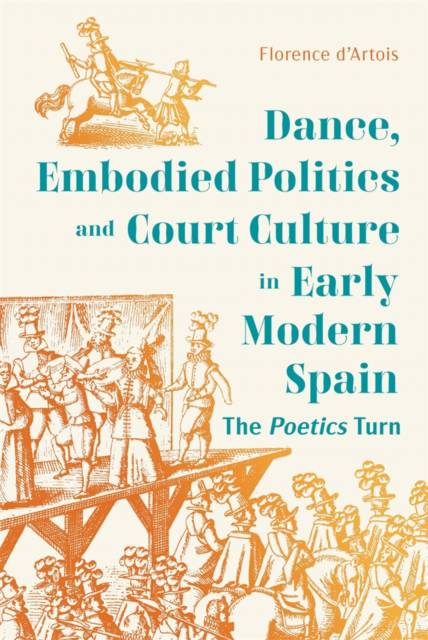
Does dance tell a story? What, if anything, is it intended to represent? How was it conceived in the early modern period? This book examines the theories and political uses of dance in Spain during the period preceding and following the 'Poetics turn', which coincided with the rule of Philip III (1598-1621), also known as the Dancing King, and the onset of the reign of Philip IV. While this turning point finalised the definition of dance as an art form, it was also paradoxical. Indeed, this development saw the emergence of an aesthetic thought of dance within Aristotelian poetics, thanks to a common court culture, yet it never led to the formulation of a poetics of ballet. By recontextualising this turning point, the book examines the relationship between dance and representation during Spain's Golden Age. It revisits the initial codifications of dance in Italy and figurative experiments at the Burgundian court during the second half of the 15th century, as well as their influence on subsequent practices and humanist theories of dance at the courts of Charles V and Philip II. Subsequently, it focuses on the various shifts in court dance as it became a scenic art at the beginning of the seventeenth century, interrogating the possibility of the king performing dance himself. The book concludes that, in Spain, neo-Aristotelian ideas enabled a shift from an ethical to an aesthetic problematic, which saw dance, whether symbolic or purely kinetic in nature, as a legitimate art form to be placed at the service of the monarchy.
Spécifications
Parties prenantes
- Auteur(s) :
- Editeur:
Contenu
- Nombre de pages :
- 468
- Langue:
- Anglais
- Collection :
Caractéristiques
- EAN:
- 9781855664067
- Date de parution :
- 23-12-2025
- Format:
- Livre relié
- Format numérique:
- Genaaid
- Dimensions :
- 156 mm x 234 mm
- Poids :
- 830 g



Seulement chez Librairie Club
+ 612 points sur votre carte client de Librairie Club
Cadeau


Les avis
Nous publions uniquement les avis qui respectent les conditions requises. Consultez nos conditions pour les avis.