


- Retrait en 2 heures
- Assortiment impressionnant
- Paiement sécurisé
- Toujours un magasin près de chez vous
- Retrait en 2 heures
- Assortiment impressionnant
- Paiement sécurisé
- Toujours un magasin près de chez vous



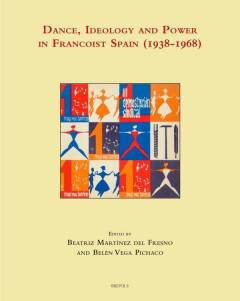
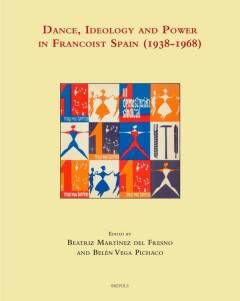
Dance, Ideology and Power in Francoist Spain (1938-1968)
Beatriz Martínez del Fresno
148,40 €
+ 296 points
Description
In 1938, the first regular Government of General Franco was constituted in the national area. Under this regime, and for almost 40 years between the end of the Civil War in 1939 and the death of the dictator in 1975, the arts in Spain developed inevitably within the frame of promotion, repression and control imposed by Francoism. In this sense, dance constitutes a privileged field of study to explore not only the propagandistic uses of ballet and dance, but also the construction of a national imagery through the activities displayed in diverse functional spectra of the time. This book aims to study systematically for the first time the relationship of dance with the dictatorial regime, the role models endorsed by the political party Falange Espanola, the traditionalist spheres and the so-called National-Catholicism, along with the propaganda and censorship strategies emanated from the State before 1968. Twenty scholars from various disciplines - Musicology, Anthropology, History, History of Dance, Cinematography - analyse the ideological and political dimensions of choreographic art. Special attention is paid to the practises and discourses on Body, Gender and Nation and to the cultural policies regarding the Festivales de Espana organized by the Ministry of Information and Tourism. Furthermore, to the imagery of flamenco exhibited in government media and questioned in certain films, the processes of instrumentalisation of traditional dance as also to the existing mechanisms of control and transgression effected in dance halls and other spaces of sociability. Together with the cultural and biopolitical strategies of Francoism, the survival of concepts arising at that time is highlighted where it is still present in the performance and teaching of Spanish dance.
Spécifications
Parties prenantes
- Auteur(s) :
- Editeur:
Contenu
- Nombre de pages :
- 568
- Langue:
- Anglais
- Collection :
- Tome:
- n° 5
Caractéristiques
- EAN:
- 9782503577401
- Date de parution :
- 21-11-17
- Format:
- Livre relié
- Format numérique:
- Genaaid
- Dimensions :
- 211 mm x 267 mm
- Poids :
- 1632 g


Seulement chez Librairie Club
+ 296 points sur votre carte client de Librairie Club
Cadeau


Les avis
Nous publions uniquement les avis qui respectent les conditions requises. Consultez nos conditions pour les avis.