


En raison d'une grève chez bpost, des retards de livraison peuvent survenir. Besoin de quelque chose en urgence ? Optez pour un retrait en magasin ou rendez-vous dans une Librairie Club à proximité.
- Retrait en 2 heures
- Assortiment impressionnant
- Paiement sécurisé
- Toujours un magasin près de chez vous
En raison d'une grève chez bpost, des retards de livraison peuvent survenir. Besoin de quelque chose en urgence ? Optez pour un retrait en magasin ou rendez-vous dans une Librairie Club à proximité.
- Retrait en 2 heures
- Assortiment impressionnant
- Paiement sécurisé
- Toujours un magasin près de chez vous



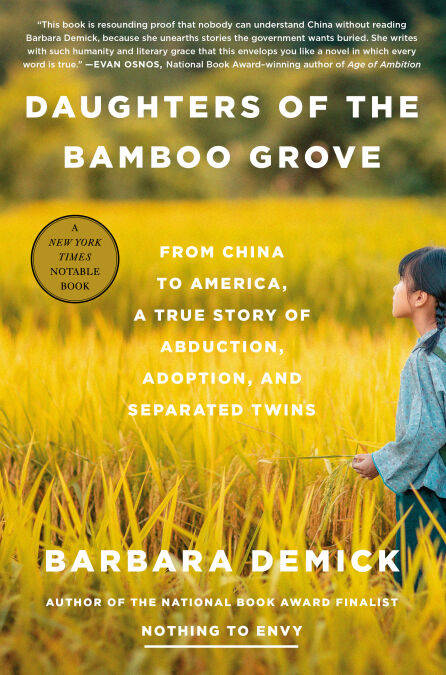
Daughters of the Bamboo Grove EBOOK
From China to America, a True Story of Abduction, Adoption, and Separated Twins
Barbara Demick
Ebook | Anglais
16,12 €
+ 16 points
Format
Description
NEW YORK TIMES BOOK REVIEW EDITORS’ CHOICE • The heartrending story of twin sisters torn apart by China’s one-child policy and the rise of international adoption—from the author of the National Book Award finalist Nothing to Envy
“Remarkable . . . Barbara Demick movingly traces this history of overseas Chinese adoptions and their ripple effects on both sides of the Pacific.”—The Wall Street Journal
WINNER OF THE CHRISTOPHER J. WELLES MEMORIAL PRIZE • FINALIST FOR THE NATIONAL BOOK CRITICS CIRCLE AWARD AND THE BAIFANG SCHELL BOOK PRIZE • LONGLISTED FOR THE WOMEN’S PRIZE FOR NONFICTION
A BEST BOOK OF THE YEAR: The New York Times Book Review, NPR, The New Yorker, The Economist
On a warm day in September 2000, a woman named Zanhua gave birth to twin girls in a small hut behind her brother’s home in China’s Hunan province. The twins, Fangfang and Shuangjie, were welcome additions to her family but also not her first children. Living under the shadow of China’s notorious one-child policy, Zanhua and her husband decided to leave one twin in the care of relatives, hoping each toddler on their own might stay under the radar. But, in 2002, Fangfang was violently snatched away. The family worried they would never see her again, but they didn’t imagine she could be sent as far as the United States. She might as well have been sent to another world.
Following stories she wrote as the Beijing bureau chief for the Los Angeles Times, Barbara Demick embarks on a journey that encompasses the origins, shocking cruelty, and long-term impact of China’s one-child rule; the rise of international adoption and the religious currents that buoyed it; and the exceedingly rare phenomenon of twin separation. Today, Esther—formerly Fangfang—lives in Texas, and Demick brings to vivid life the Christian family that felt called to adopt her, unaware that she had been kidnapped. Through Demick’s indefatigable reporting, will the long-lost sisters finally reunite—and will they feel whole again?
A remarkable window into the volatile, constantly changing China of the last half century and the long-reaching legacy of the country’s most infamous law, Daughters of the Bamboo Grove is also the moving story of two sisters torn apart by the forces of history and brought together again by their families’ determination and one reporter’s dogged work.
“Excellent . . . entrancing and disturbing . . . [Demick] is one of our finest chroniclers of East Asia. . . . [Her] characters are richly drawn, and her stories, often reported over a span of years, deliver a rare emotional wallop.”—The New York Times
“Remarkable . . . Barbara Demick movingly traces this history of overseas Chinese adoptions and their ripple effects on both sides of the Pacific.”—The Wall Street Journal
WINNER OF THE CHRISTOPHER J. WELLES MEMORIAL PRIZE • FINALIST FOR THE NATIONAL BOOK CRITICS CIRCLE AWARD AND THE BAIFANG SCHELL BOOK PRIZE • LONGLISTED FOR THE WOMEN’S PRIZE FOR NONFICTION
A BEST BOOK OF THE YEAR: The New York Times Book Review, NPR, The New Yorker, The Economist
On a warm day in September 2000, a woman named Zanhua gave birth to twin girls in a small hut behind her brother’s home in China’s Hunan province. The twins, Fangfang and Shuangjie, were welcome additions to her family but also not her first children. Living under the shadow of China’s notorious one-child policy, Zanhua and her husband decided to leave one twin in the care of relatives, hoping each toddler on their own might stay under the radar. But, in 2002, Fangfang was violently snatched away. The family worried they would never see her again, but they didn’t imagine she could be sent as far as the United States. She might as well have been sent to another world.
Following stories she wrote as the Beijing bureau chief for the Los Angeles Times, Barbara Demick embarks on a journey that encompasses the origins, shocking cruelty, and long-term impact of China’s one-child rule; the rise of international adoption and the religious currents that buoyed it; and the exceedingly rare phenomenon of twin separation. Today, Esther—formerly Fangfang—lives in Texas, and Demick brings to vivid life the Christian family that felt called to adopt her, unaware that she had been kidnapped. Through Demick’s indefatigable reporting, will the long-lost sisters finally reunite—and will they feel whole again?
A remarkable window into the volatile, constantly changing China of the last half century and the long-reaching legacy of the country’s most infamous law, Daughters of the Bamboo Grove is also the moving story of two sisters torn apart by the forces of history and brought together again by their families’ determination and one reporter’s dogged work.
“Excellent . . . entrancing and disturbing . . . [Demick] is one of our finest chroniclers of East Asia. . . . [Her] characters are richly drawn, and her stories, often reported over a span of years, deliver a rare emotional wallop.”—The New York Times
Spécifications
Parties prenantes
- Auteur(s) :
- Editeur:
Contenu
- Nombre de pages :
- 352
- Langue:
- Anglais
Caractéristiques
- EAN:
- 9780593132753
- Date de parution :
- 19-05-25
- Format:
- Ebook
- Protection digitale:
- Adobe DRM
- Format numérique:
- ePub


Seulement chez Librairie Club
+ 16 points sur votre carte client de Librairie Club

Les avis
Nous publions uniquement les avis qui respectent les conditions requises. Consultez nos conditions pour les avis.