


- Retrait en 2 heures
- Assortiment impressionnant
- Paiement sécurisé
- Toujours un magasin près de chez vous
- Retrait en 2 heures
- Assortiment impressionnant
- Paiement sécurisé
- Toujours un magasin près de chez vous




Description
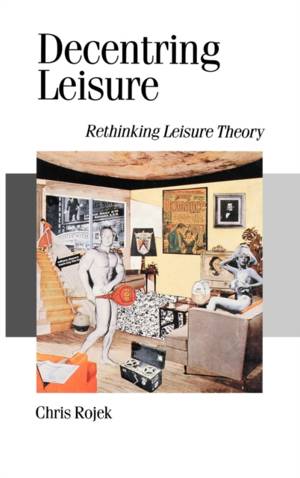
"Chris Rojek provides a useful and well-referenced survey of modernist and postmodernist cultural theory. Always careful to locate his analysis in the work of leading thinkers, the reader is treated to a concise trip around the houses of recent and current cultural theory, stopping regularly to reconsider what light can be shed on the question of leisure in postmodern society." --Paul Ransome School of Social Studies University of Nottingham "This then is a book to get you thinking. It has proved impossible to convey accurately the exciting, wide-ranging, seemingly effortless travel across a wide variety of schools, disciplines and thinkers which Rojek employs to support his argument. he uses a direct personal style which shines through the closely argued material and keeps you turning the pages to the very end. Students brought up in the modernist traditions of sociologies of leisure may find this book challenging and ultimately even frustrating, but it is an essential text which I hope will appear on recommended reading lists everywhere leisure is studied." --Diane Seymour in Work, Employment & Society Prized and pursued by members of all societies, leisure is recognized as a consistent element of culture; yet within the context of disparate political and social structures, both its literal and symbolic significance differ greatly. In Decentring Leisure, author Chris Rojek considers the influence of such key social constructs as capitalism, modernity, and postmodernity on the ways we have come to perceive and use leisure. Within a capitalist framework, issues ranging from the meaning of workers′ free time to the gendered nature of leisure are explored; the impact of modernity is examined next, offering accounts and analyses of the prevailing--and conflicting--theories. Finally, the author assays the cultural condition that has radically changed the idea of leisure: postmodernism. From a critical assessment of the effects of living in a risk society to a survey of the works of philosophic masters including Marx, Weber, Nietzsche, and Baudrillard, this absorbing volume will be required reading for students of leisure, culture, and social theory.
Spécifications
Parties prenantes
- Auteur(s) :
- Editeur:
Contenu
- Nombre de pages :
- 224
- Langue:
- Anglais
- Collection :
- Tome:
- n° 35
Caractéristiques
- EAN:
- 9780803988125
- Date de parution :
- 08-06-95
- Format:
- Livre relié
- Format numérique:
- Genaaid
- Dimensions :
- 156 mm x 234 mm
- Poids :
- 498 g


Seulement chez Librairie Club
+ 692 points sur votre carte client de Librairie Club
Cadeau


Les avis
Nous publions uniquement les avis qui respectent les conditions requises. Consultez nos conditions pour les avis.