


- Retrait en 2 heures
- Assortiment impressionnant
- Paiement sécurisé
- Toujours un magasin près de chez vous
- Retrait en 2 heures
- Assortiment impressionnant
- Paiement sécurisé
- Toujours un magasin près de chez vous



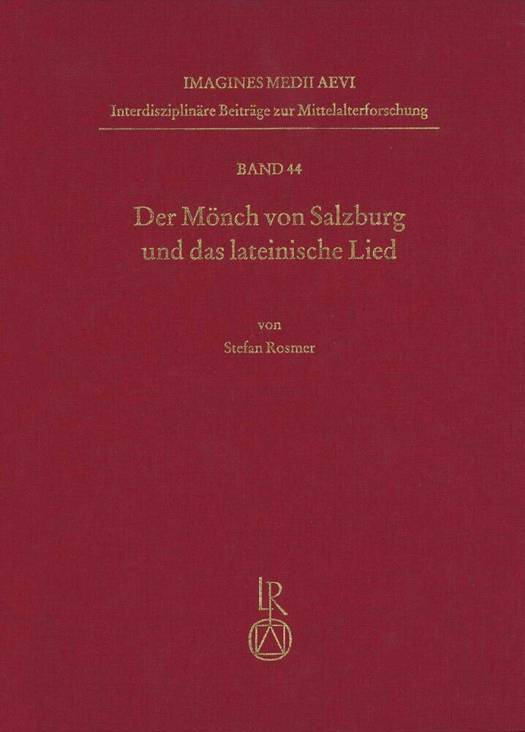
Der Mönch Von Salzburg Und Das Lateinische Lied
Die Geistlichen Lieder in Stolligen Strophen Und Das Einstimmige Gottesdienstliche Lied Im Späten Mittelalter
Stefan Rosmer
131,95 €
+ 263 points
Description
The subject of this study are the sacred songs in the 'Monk of Salzburg' corpus which have the stanzaic form of the canzone. The monograph focuses on the question to which musical and lyrical traditions these songs refer. In line with the critical literature review of the functions of vernacular sacred song in the German speaking regions, the study argues that these songs are to be interpreted within the Latin tradition of the (monophonic) Liturgical Song, a genre which emerged in the late 12th century and was highly productive in Central Europe until the mid-15th century.
The study of a larger amount of manuscripts from the 14th and 15th century containing monophonic Latin songs provides the ground for a comparison of late medieval Latin liturgical songs which also have a canzonic form with the German songs from the Monk corpus. In order to establish the connection between Latin and German songs, the study proposes a new analytical model sung poetry which integrates linguistic, melodic and metrical features and those of the rhyme in regard to the stanza as a unity. In conclusion, it can be shown that the Sacred songs of the Monk corpus as whole almost systematically rely on, reflect and adapt all the elaborate and artistic forms of liturgical poetry.
The monograph makes the field of monophonic Latin Liturgical Song accessible to scholars of Medieval German Literature and provides a profound overview; German-Latin contrafacta are studied in detail. Additionally, the book is of relevance for musicologists-due to the analyses of melodies-as well as for scholars of Medieval Latin. Furthermore, it contributes to the research of Latin manuscripts containing musical notation from the 14th and 15th century. One of the appendices contains the edition of 38 late medieval Liturgical Songs.
The study of a larger amount of manuscripts from the 14th and 15th century containing monophonic Latin songs provides the ground for a comparison of late medieval Latin liturgical songs which also have a canzonic form with the German songs from the Monk corpus. In order to establish the connection between Latin and German songs, the study proposes a new analytical model sung poetry which integrates linguistic, melodic and metrical features and those of the rhyme in regard to the stanza as a unity. In conclusion, it can be shown that the Sacred songs of the Monk corpus as whole almost systematically rely on, reflect and adapt all the elaborate and artistic forms of liturgical poetry.
The monograph makes the field of monophonic Latin Liturgical Song accessible to scholars of Medieval German Literature and provides a profound overview; German-Latin contrafacta are studied in detail. Additionally, the book is of relevance for musicologists-due to the analyses of melodies-as well as for scholars of Medieval Latin. Furthermore, it contributes to the research of Latin manuscripts containing musical notation from the 14th and 15th century. One of the appendices contains the edition of 38 late medieval Liturgical Songs.
Spécifications
Parties prenantes
- Auteur(s) :
- Editeur:
Contenu
- Nombre de pages :
- 520
- Langue:
- Allemand
- Collection :
Caractéristiques
- EAN:
- 9783954903481
- Date de parution :
- 28-05-19
- Format:
- Livre relié
- Format numérique:
- Genaaid
- Dimensions :
- 170 mm x 240 mm
- Poids :
- 485 g


Seulement chez Librairie Club
+ 263 points sur votre carte client de Librairie Club
Cadeau


Les avis
Nous publions uniquement les avis qui respectent les conditions requises. Consultez nos conditions pour les avis.