


- Retrait en 2 heures
- Assortiment impressionnant
- Paiement sécurisé
- Toujours un magasin près de chez vous
- Retrait en 2 heures
- Assortiment impressionnant
- Paiement sécurisé
- Toujours un magasin près de chez vous



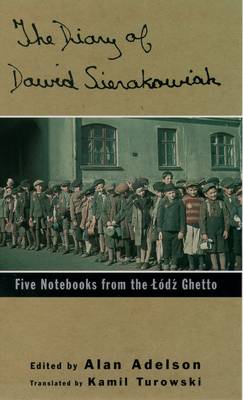
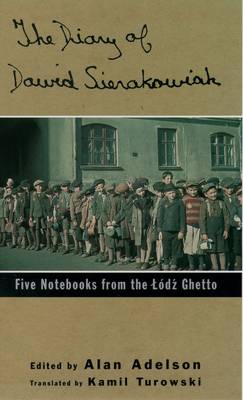
Diary of Dawid Sierakowiak
Five Notebooks from the Lodz Ghetto
Dawid Sierakowiak
Livre broché | Anglais
33,45 €
+ 66 points
Description
"In the evening I had to prepare food and cook supper, which exhausted me totally. In politics there's absolutely nothing new. Again, out of impatience I feel myself beginning to fall into melancholy. There is really no way out of this for us." This is Dawid Sierakowiak's final diary entry. Soon after writing it, the young author died of tuberculosis, exhaustion, and starvation - the Holocaust syndrome known as "ghetto disease." After the liberation of the Lodz Ghetto, his notebooks were found stacked on a cookstove, ready to be burned for heat. Young Sierakowiak was one of more than 60,000 Jews who perished in that notorious urban slave camp, a man-made hell which was the longest surviving concentration of Jews in Nazi Europe. The diary comprises a remarkable legacy left to humanity by its teenage author. It is one of the most fastidiously detailed accounts ever rendered of modern life in human bondage. Off mountain climbing and studying in southern Poland during the summer of 1939, Dawid begins his diary with a heady enthusiasm to experience life, learn languages, and read great literature. He returns home under the quickly gathering clouds of war. Abruptly Lodz is occupied by the Nazis, and the Sierakowiak family is among the city's 200,000 Jews who are soon forced into a sealed ghetto, cut off from the outside world. The wonder of the diary is that every bit of hardship yields wisdom from Dawid's remarkable intellect. Reading it, you become a prisoner with him in the ghetto, and with disconcerting intimacy you begin to experience the incredible process by which the vast majority of the Jews of Europe were annihilated in World War II. Significantly, the youth has no doubt about theconsequence of deportation out of the ghetto: "Deportation into scrap metal, " he calls it. A committed communist and the unit leader of an underground organization, he crusades for more food for the ghetto's school children. But when invited to pledge his life to a suicide resista
Spécifications
Parties prenantes
- Auteur(s) :
- Traducteur(s):
- Editeur:
Contenu
- Nombre de pages :
- 288
- Langue:
- Anglais
Caractéristiques
- EAN:
- 9780195122855
- Date de parution :
- 14-05-98
- Format:
- Livre broché
- Format numérique:
- Trade paperback (VS)
- Dimensions :
- 136 mm x 204 mm
- Poids :
- 244 g


Seulement chez Librairie Club
+ 66 points sur votre carte client de Librairie Club
Cadeau


Les avis
Nous publions uniquement les avis qui respectent les conditions requises. Consultez nos conditions pour les avis.