


- Retrait en 2 heures
- Assortiment impressionnant
- Paiement sécurisé
- Toujours un magasin près de chez vous
- Retrait en 2 heures
- Assortiment impressionnant
- Paiement sécurisé
- Toujours un magasin près de chez vous



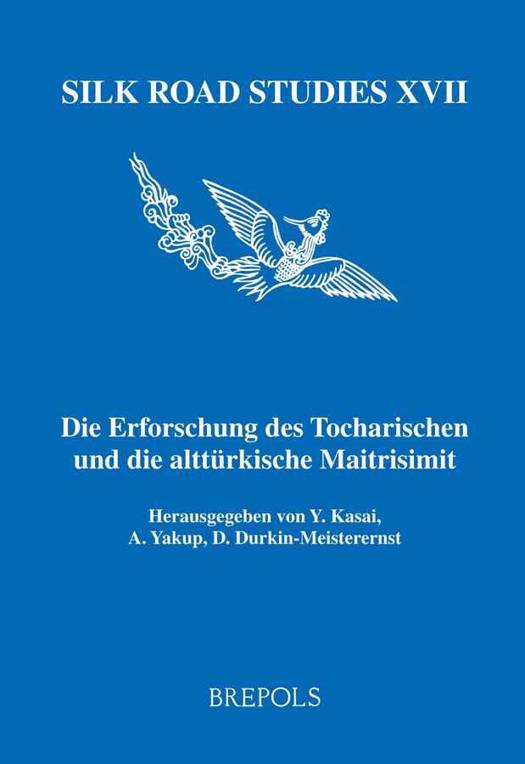
Die Erforschung des Tocharischen und die alttürkische Maitrisimit
Desmond Durkin-Meisterernst
100,70 €
+ 201 points
Description
This volume contains the proceedings of a small conference held by the Turfan Study Group (Turfanforschung) of the Berlin Brandenburg Academy of Sciences and Humanities, Berlin, in April 2008 on the 100th anniversary of E. Sieg and W. Siegling's article 'Tocharisch, die Sprache der Indoskythen. Vorlaufige Bemerkungen uber eine bisher unbekannte indogermanische Literatursprache' which marks the beginning of the new subject 'Tocharian studies'. This forgotten Indo-European language was just re-emerging in texts gathered by the various scientific expeditions to Eastern Central Asia at the beginning of the 20th century. On the basis of a colophon in the Old Turkish text Maitrisimit, F. W. K. Muller had already in 1907 suggested the name 'Tocharian' which, despite misgivings, continues to be used today for texts in two distinct but closely related varieties, 'A' and 'B'. The volume is in part devoted to aspects of the history of the study of Tocharian and to details of the languages themselves but also to palaeography and cataloguing the Tocharian fragments in Berlin. The colophon to the Old Turkish Maitrisimit is the starting point for the second theme of the volume: The interaction between Tocharian and Old Turkish Buddhist texts, a currently much discussed phenomenon. The contributions here range from a description of newly found Old Turkish fragments, to a discussion of parallel Tocharian and Old Turkish passages, aspects of the cult of Maitreya, the question of Buddhist doctrinal schools in Central Asia, the possible connection of Buddhist dramatical texts with the Chinese bianwen literature, the Old Turkish 'New Day' and other aspects of this and similar narrative religious texts. The book includes an extensive documentation of Tocharian and Old Turkish fragments in the Berlin Turfan Collection to illustrate the Tocharian fragments for which a C14-dating is now available and Tocharian palaeography as well as fragments containing passages of text common to the Tochrian A Maitreyasamitinataka and the Old Turkish Maitrisimit.
Spécifications
Parties prenantes
- Auteur(s) :
- Editeur:
Contenu
- Nombre de pages :
- 416
- Langue:
- Allemand
- Collection :
- Tome:
- n° 17
Caractéristiques
- EAN:
- 9782503546117
- Date de parution :
- 10-07-13
- Format:
- Livre broché
- Format numérique:
- Trade paperback (VS)
- Poids :
- 452 g


Seulement chez Librairie Club
+ 201 points sur votre carte client de Librairie Club
Cadeau


Les avis
Nous publions uniquement les avis qui respectent les conditions requises. Consultez nos conditions pour les avis.