


- Retrait en 2 heures
- Assortiment impressionnant
- Paiement sécurisé
- Toujours un magasin près de chez vous
- Retrait en 2 heures
- Assortiment impressionnant
- Paiement sécurisé
- Toujours un magasin près de chez vous



83,45 €
+ 166 points
Description
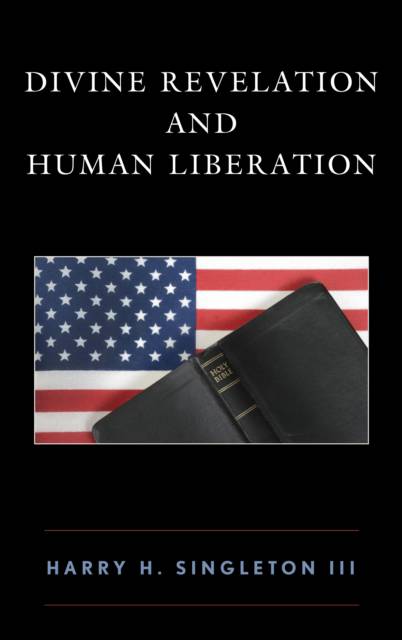
Harry H. Singleton is concerned in this work with the disparate ways blacks and whites have experienced American history and subsequently the way they have fashioned God's communication to humans, formerly referred to as revelation. This book makes the case that while white Christian leaders have rooted God's revelation either in an inherently inferior black humanity or a Christian faith void of black suffering, black theologians have rooted that same revelation in the plight of oppressed peoples in general and black people in particular, i.e., that God's essence is found in the struggle for human liberation. With clarity and passion, Professor Singleton draws on the treatments of revelation of the most celebrated white theologians to demonstrate that the Christian theological enterprise has by intent and effect linked God's revelation with black inferiority. Black theologians, on the other hand, have countered seeking a more liberating view of black humanity by making the case that the God of the Bible ultimately intervenes in contexts of human oppression not for their perpetuation but rather for their destruction. In this sense, Singleton pushes the reader to the conclusion that although the treatments of revelation between white and black theologians have been as different as their lived histories, the object of revelation has been the same - the humanity of black people! Thus, Singleton puts forth the bold argument that the racial struggle in America has not only been an historical struggle for determining the humanity of black people but a theological struggle for determining the humanity of black people as well. But far from remaining objective, Singleton takes the liberating path for black humanity and presses his way through the pages of this work seeking a new paradigm for revelation that no longer places God at the intersection of the white-black encounter as a condoner of racism or as a disinterested observer in the racial struggle but rather as an eternal light whose very nature is seen in the continuing quest for human liberation.
Spécifications
Parties prenantes
- Auteur(s) :
- Editeur:
Contenu
- Nombre de pages :
- 146
- Langue:
- Anglais
Caractéristiques
- EAN:
- 9781978702998
- Date de parution :
- 07-07-20
- Format:
- Livre broché
- Format numérique:
- Trade paperback (VS)
- Dimensions :
- 152 mm x 229 mm
- Poids :
- 222 g



Seulement chez Librairie Club
+ 166 points sur votre carte client de Librairie Club
Cadeau


Les avis
Nous publions uniquement les avis qui respectent les conditions requises. Consultez nos conditions pour les avis.