


- Retrait en 2 heures
- Assortiment impressionnant
- Paiement sécurisé
- Toujours un magasin près de chez vous
- Retrait en 2 heures
- Assortiment impressionnant
- Paiement sécurisé
- Toujours un magasin près de chez vous



116,60 €
+ 233 points
Description
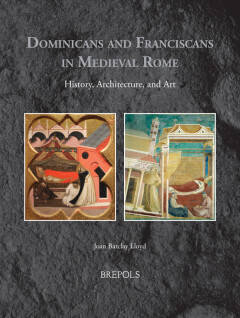
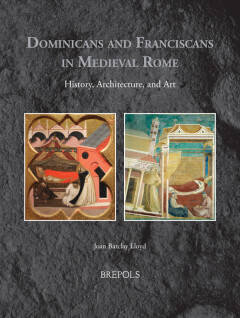
When Saint Dominic (c. 1174-1221) came to Rome to seek papal approval of the Order of Preachers, he founded two houses on the periphery of the city - a nunnery at S. Sisto, in structures rebuilt by Pope Innocent III, and a priory next to the early Christian basilica of S. Sabina. The Dominicans modified and enlarged the existing buildings, according to their needs. Saint Francis of Assisi (c. 1182-1226) also came to consult the Pope, but he did not make any foundations in Rome. In 1229, Pope Gregory IX ordered the Benedictine monks of SS. Cosma e Damiano in Mica Aurea to cede to the Franciscans their hospice of S. Biagio in Trastevere, where Saint Francis had stayed. The friars built the church and friary of S. Francesco a Ripa there. Later, Gregory IX took over the Benedictine monastery itself, where he established the Franciscan nunnery of S. Cosimato in 1234. Moving into the more densely inhabited parts of the city, the Friars Minor built a new friary and church at S. Maria in Aracoeli on the Capitoline Hill from c. 1248-1252 onwards. The Dominicans, in 1266, acquired a convent near the Pantheon, where they constructed the Gothic church of S. Maria sopra Minerva. In 1285, the Colonna family established a Franciscan nunnery at S. Silvestro in Capite. In the context of the origin and evolution of the two Mendicant Orders, this book traces the history of these thirteenth-century Dominican and Franciscan foundations, focussing on their location in Rome, the history of each site, their architecture, and the medieval works of art connected with them. Popes and cardinals, members of important families, and Franciscan Tertiaries contributed generously to their construction and decoration. The book ends with Saint Catherine of Siena, who lived near S. Maria sopra Minerva, where she was buried.
Spécifications
Parties prenantes
- Auteur(s) :
- Editeur:
Contenu
- Nombre de pages :
- 439
- Langue:
- Anglais
- Collection :
- Tome:
- n° 6
Caractéristiques
- EAN:
- 9782503578835
- Date de parution :
- 13-10-22
- Format:
- Livre relié
- Format numérique:
- Genaaid
- Dimensions :
- 218 mm x 286 mm
- Poids :
- 1973 g


Seulement chez Librairie Club
+ 233 points sur votre carte client de Librairie Club
Cadeau


Les avis
Nous publions uniquement les avis qui respectent les conditions requises. Consultez nos conditions pour les avis.