

- Retrait en 2 heures
- Assortiment impressionnant
- Paiement sécurisé
- Toujours un magasin près de chez vous
- Retrait en 2 heures
- Assortiment impressionnant
- Paiement sécurisé
- Toujours un magasin près de chez vous



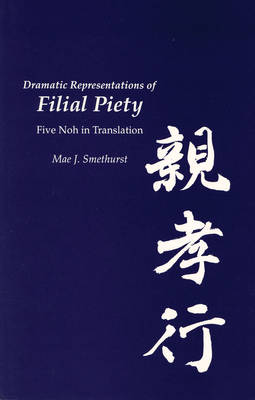
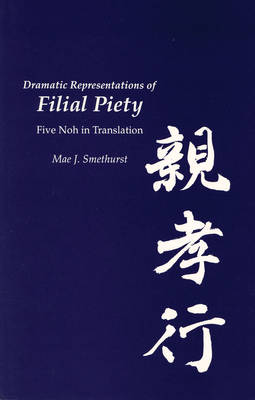
Dramatic Representations of Filial Piety
Five Nohs in Translation
22,45 €
+ 44 points
Passer une commande en un clic
Payer en toute sécurité


Livraison en Belgique: 3,99 €
Livraison en magasin gratuite
Description
This volume of five noh translations (containing an introduction, translations, short commentaries and a glossary) differs from most others in that none of the plays are of the mugenno type, but are instead genzaino, real-life noh. The plays focus on living characters rather than spirits or ghosts, and on dramatic action rather than poetry, song and dance. In addition the five noh satisfy several of the most important features of Aristotle's definition of good tragedy. That is, they all have plot, which Aristotle says in his Poetics is the imitation of action. The plot centers on characters who are related to each other or are a part of the same household. In each plot, a fatal or harmful event is either enacted or threatened, and there is an unexpected change in the direction of the action. In Shun'ei, a father, visited by his son, is pardoned from a death sentence; in Dampu, a son visits his father, who is then executed, and upon avenging his father's death, unexpectedly escapes the killer's henchmen; in Shichikiochi and Nakamitsu, a son thought to have been killed turns up alive, much to the amazement of his father; and finally, in Nishikido, a brother turns on his own brother and attacks with military force. This volume is intended to provide the reader with a translation of noh plays that either have not been previously translated into English or have not been translated for a long time. The translations are as faithful as possible to the original Japanese so that the reader can gain a close glimpse of the language and action of this particular type of noh. It is a noh filled with action compared to many that have been translated, a noh that appealed to the public at large during the medieval period. Bibliography and scholarly notes are kept to a minimum.
Spécifications
Parties prenantes
- Traducteur(s):
- Editeur:
Contenu
- Nombre de pages :
- 186
- Langue:
- Anglais
- Collection :
- Tome:
- n° 97
Caractéristiques
- EAN:
- 9781885445971
- Date de parution :
- 31-03-10
- Format:
- Livre broché
- Format numérique:
- Trade paperback (VS)
- Dimensions :
- 151 mm x 221 mm
- Poids :
- 281 g

Seulement chez Librairie Club
+ 44 points sur votre carte client de Librairie Club
Cadeau

Cadeau


Les avis
Nous publions uniquement les avis qui respectent les conditions requises. Consultez nos conditions pour les avis.