


- Retrait en 2 heures
- Assortiment impressionnant
- Paiement sécurisé
- Toujours un magasin près de chez vous
- Retrait en 2 heures
- Assortiment impressionnant
- Paiement sécurisé
- Toujours un magasin près de chez vous



74,20 €
+ 148 points
Description
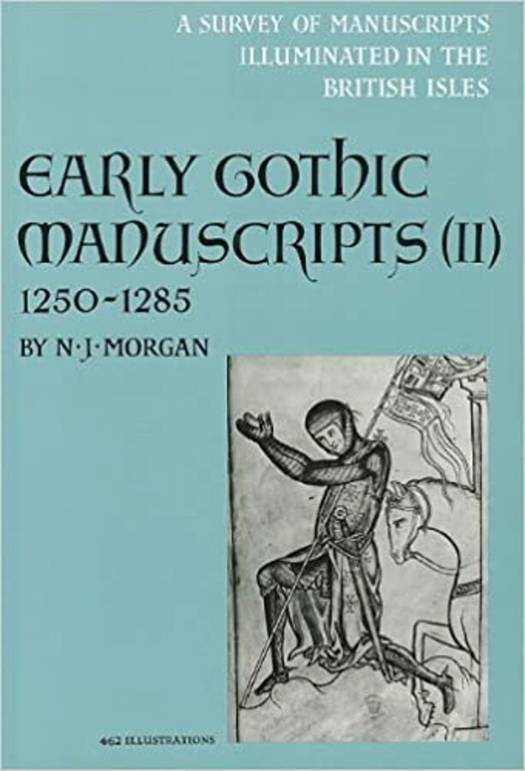
In England the art of illumination flourished widely in the second half of the 13th century - a time in which the connections with the continent, particularly France, where strong. Artists moved away from the monastic scriptorium to professional workshops in urban centres, and the rise of the Universities resulted in the production of new types of illustrated text. As with cross-fertilization of ideas from Paris to London, Oxford, and Cambridge, so with the styles and techniques of illumination. The magnificent examples catalogued here include the Lambeth, Metz, Douce and Trinity Apocalypses; their relationships are examined and detailed iconography is described. Many of the Bibles and - notably - the Amesbury, Oscott and Rutland Psalters are some of the greatest works of the period, and among surviving religious manuscripts the earliest examples of Books of Hours reveal the increasing range of devotional interests of lay people. Astrological, legal, medical, topographical and historical works are also included, and the volume ends with the remarkable Hereford Mad which summarizes many of the ideas of Earth and Heaven prevailing at the time. The Introduction sets the manuscripts in a historical framework, describes the influences at work, defines the types of books and their decoration, and discusses evidence for dating and localization. This is a survey of early Gothic manuscripts illuminated in the British Isles, setting them in a historical framework, describing the influences at work, defining the types of books and their decoration, and discussing evidence for dating and localization.
Spécifications
Parties prenantes
- Auteur(s) :
- Editeur:
Contenu
- Nombre de pages :
- 374
- Langue:
- Anglais
- Collection :
Caractéristiques
- EAN:
- 9780905203539
- Date de parution :
- 01-01-88
- Format:
- Livre relié
- Format numérique:
- Genaaid
- Dimensions :
- 231 mm x 330 mm
- Poids :
- 2218 g


Seulement chez Librairie Club
+ 148 points sur votre carte client de Librairie Club
Cadeau


Les avis
Nous publions uniquement les avis qui respectent les conditions requises. Consultez nos conditions pour les avis.