


- Retrait en 2 heures
- Assortiment impressionnant
- Paiement sécurisé
- Toujours un magasin près de chez vous
- Retrait en 2 heures
- Assortiment impressionnant
- Paiement sécurisé
- Toujours un magasin près de chez vous



7,99 €
+ 7 points
Format
Description
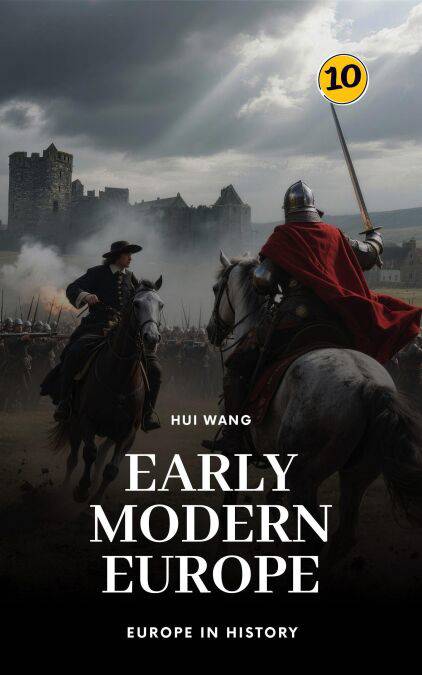
Early Modern Europe: Europe in History, PART TWO, is where I guide you into the turning point of a continent caught between empire and belief. The story opens with giants of the age—Charles V, Ferdinand, and Philip II—rulers who straddled old feudal orders and rising confessional conflicts. These were men who tried to hold together a fragile world of layered loyalties even as religious change chipped away at their authority. I want you to meet them not as distant statues, but as fallible humans whose choices set events in motion.
You will travel from tensions at the heart of Habsburg Spain to the thunder of the Spanish Armada and the upheaval of the Dutch Revolt. Along the way you'll encounter hard-faced enforcers like Fernando Álvarez de Toledo, the Duke of Alba, and stubborn rebels such as William of Orange. Their contests—bloody, political, and ideological—reveal how power, faith, and the instinct to survive were braided together, and how those strands eventually unraveled medieval patterns. I focus on the decisions these people made—decisions that pushed Europe away from a medieval kind of unity and toward an entirely new political landscape.
The journey then shifts to England and the rise of the Tudors. You meet Henry VII, the cautious founder who steadied a fractured realm, and Henry VIII, whose personal needs and political ambitions tore England out of Rome's orbit. Catherine of Aragon is part of that drama—her marriage and its annulment became the spark for a church split—while Thomas Cromwell emerges as the relentless architect behind administrative and religious change, orchestrating the dissolution of monasteries and reshaping royal government.
Alongside these high politics, social upheavals tug at the countryside. The enclosure movement—a long, often brutal reordering of land tenure—transformed common pastures into private holdings and altered how ordinary people ate, worked, and survived. Kett's Rebellion, erupting in Norfolk as a furious response to these pressures, shows how decisions made in royal chambers reached deep into village life, turning grievances about hedgerows and rents into full-scale protest.
As the story moves forward, the spotlight turns to Elizabeth I, master of political performance and compromise, then to James I, who united crowns and complicated religious settlements, and to Charles I, whose stubborn claims made accommodation impossible. Those struggles spiral into the English Civil War, where Oliver Cromwell rises from military prominence to reshape the state and the meaning of authority. For a time the fate of monarchy hangs in the balance; its restoration under Charles II brings a return of kings but also a reminder of how fragile authority had become after decades of violent change.
Spécifications
Parties prenantes
- Auteur(s) :
- Editeur:
Contenu
- Langue:
- Anglais
- Collection :
Caractéristiques
- EAN:
- 9789190150306
- Date de parution :
- 22-02-26
- Format:
- Ebook
- Protection digitale:
- /
- Format numérique:
- ePub


Seulement chez Librairie Club
+ 7 points sur votre carte client de Librairie Club
Cadeau


Les avis
Nous publions uniquement les avis qui respectent les conditions requises. Consultez nos conditions pour les avis.