


En raison d'une grève chez bpost, votre colis sera expédié par GLS afin d’assurer une livraison dans les meilleurs délais.
- Retrait en 2 heures
- Assortiment impressionnant
- Paiement sécurisé
- Toujours un magasin près de chez vous
En raison d'une grève chez bpost, votre colis sera expédié par GLS afin d’assurer une livraison dans les meilleurs délais.
- Retrait en 2 heures
- Assortiment impressionnant
- Paiement sécurisé
- Toujours un magasin près de chez vous


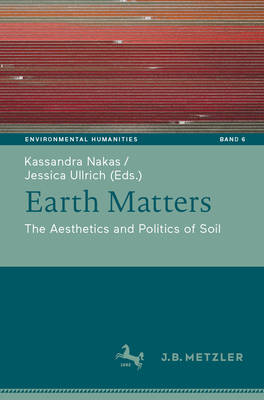
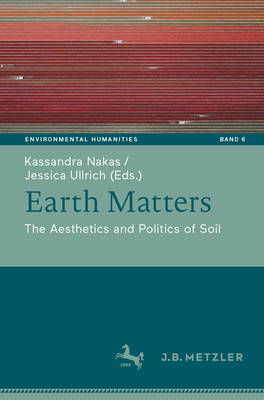
Earth Matters
The Aesthetics and Politics of Soil
108,45 €
+ 216 points
Description
This book addresses the increasing social, scientific and, above all, artistic discussion of soil(s) in current cultural-societal contexts. The end of the "International Decade of Soils" (2015-2024) marked a development that has focussed on the central importance of the earth for life, biodiversity and climate on our planet since the turn of the millennium. In addition to the political and scientific recognition of this, Earth as a material has increasingly become the centre of cultural and artistic debates. In these debates, the awareness of the earth as a living organism initiated in the social and natural science discourse was taken up and further deepened. Earth is thus understood as a carrier of history, culture and identity, as a distinct and genuinely self-sufficient ecosystem that is, however, existentially threatened by climate change, industrialised and unsustainable forms of agriculture, as well as extractivism. In art, soil has evolved from an aesthetic medium to a carrier of political, ecological and historical statements. Artists today thematise ecological crises, colonial violence, land grabbing, plant blindness and the close relationship between humans and the earth. New narrative, archival and installative forms are emerging in which the earth is not just a material but an actor - often in the sense of a 'new materialism' or 'posthumanism'. Numerous exhibitions worldwide testify to the growing interest in the topic of soil in art. Historical pioneers such as Ana Mendieta, Agnes Denes and herman de vries have laid the foundations for today's positions. Current works often take up Indigenous perspectives, feminist approaches and ecological issues and call for a new relationship with the earth - as a living counterpart, not as an object to be exploited. With a number of essays ranging from Western philosophy to Indigenous epistemology, from historical examples to highly topical activist positions, this book aims to give a comprehensive insight into current theoretical and artistic discourses in ecological art studies. It brings together contributions from different continents that shed light on the topic of soil(s) in distinctive cultural contexts: as a 'natural given', political token, artistic matter, mythological bearer, and others. In this light, the eponymous term "soil" is being conceptualized in its pluralistic sense: There is no such thing as definitive and solitary soil, but it has different meanings in different geographical, political, historical and cultural contexts. Contributions by established scholars as well as junior researchers offer a range of methodological approaches: art historical essays weighing in on the aesthetic implications of earthen matter, eco-political and eco-feminist theories, material studies, and others.
Spécifications
Parties prenantes
- Editeur:
Contenu
- Nombre de pages :
- 270
- Langue:
- Anglais
- Collection :
- Tome:
- n° 6
Caractéristiques
- EAN:
- 9783662733189
- Date de parution :
- 26-07-26
- Format:
- Livre broché
- Format numérique:
- Trade paperback (VS)
- Dimensions :
- 155 mm x 235 mm

Seulement chez Librairie Club
+ 216 points sur votre carte client de Librairie Club
Cadeau


Les avis
Nous publions uniquement les avis qui respectent les conditions requises. Consultez nos conditions pour les avis.