


- Retrait en 2 heures
- Assortiment impressionnant
- Paiement sécurisé
- Toujours un magasin près de chez vous
- Retrait en 2 heures
- Assortiment impressionnant
- Paiement sécurisé
- Toujours un magasin près de chez vous



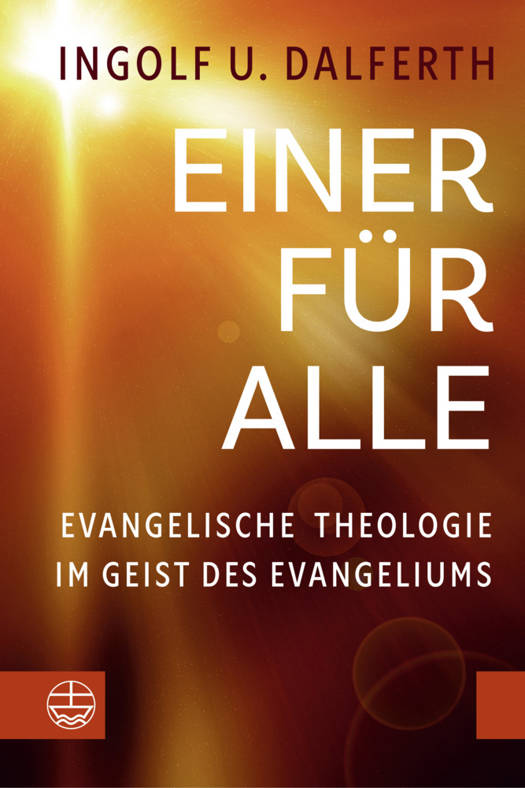
Einer Fur Alle
Evangelische Theologie Im Geist Des Evangeliums
Ingolf U Dalferth
Livre broché | Allemand
38,45 €
+ 76 points
Format
Description
Theology without substance is merely an empty concept for anything and everything, and a church without theological orientation is quicksand in the wind of current events. Evangelical theology in Germany once stood for a new beginning in theology-as Reformation theology, which emphasized the freedom of Christians, and as a theology of the united churches that helped overcome the conflicts between Lutheran and Reformed traditions. Today, evangelical theology itself needs a new direction. Its future lies not in weakening its Christian profile and an opening up to the spiritual diversity of religion and religions, but in a strictly soteriologically oriented Christian theology. Christian theology is theology that is oriented toward the spirit of the Gospel, the creative life force through which God works for the good of creation, even where one does not expect or notice it. Without this spirit, there would be no Christianity, no Christendom, and no Christian theology. This book explores what changes in the understanding of God, humanity, Jesus Christ, and the Church when theological reflection is soteriologically oriented toward the spirit of the Gospel. Ingolf U. Dalferth, Dr. theol., Dr. h.c. mult., Jahrgang 1948, war von 1995 bis 2013 Ordinarius fur Systematische Theologie, Symbolik und Religionsphilosophie an der Universitat Zurich und von 1998 bis 2012 Direktor des Instituts fur Hermeneutik und Religionsphilosophie der Universitat Zurich. Von 2007 bis 2020 lehrte er als Danforth Professor for Philosophy of Religion an der Claremont Graduate University in Kalifornien. Dalferth war mehrfach Prasident der Europaischen Gesellschaft fur Religionsphilosophie, von 1999 bis 2008 Grundungsprasident der Deutschen Gesellschaft fur Religionsphilosophie und 2016/2017 Prasident der Society for the Philosophy of Religion in den USA. Er war Lecturer in Durham, Cambridge, Manchester und Oxford, Fellow am Collegium Helveticum in Zurich, am Wissenschaftskolleg zu Berlin, am Center for Subjectivity Research in Kopenhagen und am Institut fur Religionsophilosophische Forschung in Frankfurt sowie von 2017 bis 2018 Leibniz-Professor in Leipzig. Von 2000 bis 2020 war er Hauptherausgeber der Theologischen Literaturzeitung. Dalferth erhielt in den Jahren 2005 und 2006 die Ehrendoktorwurden der Theologischen Fakultaten von Uppsala und Kopenhagen.
Spécifications
Parties prenantes
- Auteur(s) :
- Editeur:
Contenu
- Langue:
- Allemand
Caractéristiques
- EAN:
- 9783374080335
- Date de parution :
- 20-02-26
- Format:
- Livre broché
- Format numérique:
- Trade paperback (VS)
- Dimensions :
- 142 mm x 28 mm
- Poids :
- 602 g


Seulement chez Librairie Club
+ 76 points sur votre carte client de Librairie Club
Cadeau


Les avis
Nous publions uniquement les avis qui respectent les conditions requises. Consultez nos conditions pour les avis.