


- Retrait en 2 heures
- Assortiment impressionnant
- Paiement sécurisé
- Toujours un magasin près de chez vous
- Retrait en 2 heures
- Assortiment impressionnant
- Paiement sécurisé
- Toujours un magasin près de chez vous



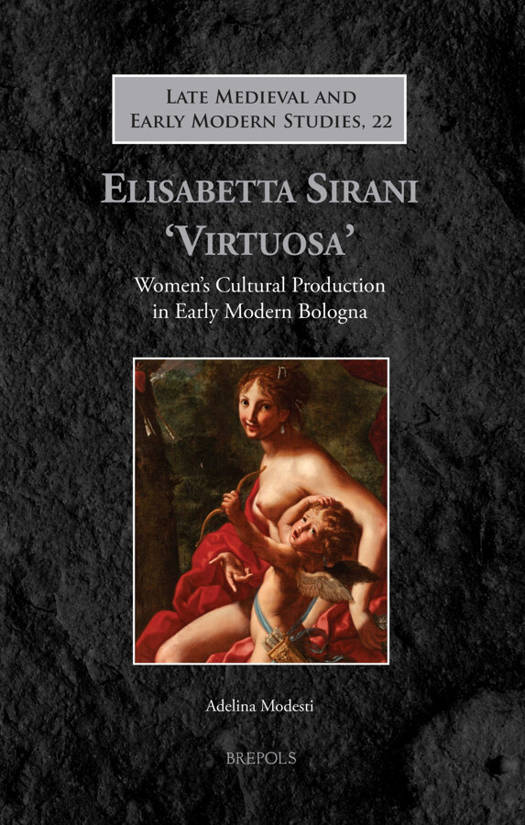
Elisabetta Sirani 'Virtuosa'
Adelina Modesti
190,80 €
+ 381 points
Description
This is the first monograph in English published on the successful Bolognese seventeenth-century artist Elisabetta Sirani (1638-1665). Modesti presents Sirani as a 'subject of her own genre', underlining the painter's innovative qualities, not only in artistic terms, but also from a socio-political and historical perspective. The author's discussion of the material context of women's artistic production and of the Bolognese seventeenth-century cultural world evidences how Sirani epitomized a new model of 'femininity' and a new rising social genre: the single professional woman. Having been rightly admitted to an artistic, social, and cultural world historically dominated by men, Sirani was an unmarried woman who chose a productive and rewarding career over the traditional role of wife and mother. An 'ultramodern artist', deemed by her contemporaries to be extremely talented and inventive, Sirani affirmed her professional status within a mostly male world thanks to her extraordinary cultural learning and virtuoso artistic skills, as well as the clever management of her public image and success. Being a woman was not a hindrance to Sirani, but rather a positive element: by projecting her own image and identity onto the femme fortes of ancient history, and by inviting important guests to her studio so as to observe her painting, she organized her own 'public exhibition', thus becoming both the subject and the object of her own art. Modesti underscores Sirani's momentous role in the professionalization of Italian women's cultural production and artistic practice at the beginning of the modern era and highlights Sirani's role as an example for successive generations of professional women artists.
Spécifications
Parties prenantes
- Auteur(s) :
- Editeur:
Contenu
- Nombre de pages :
- 493
- Langue:
- Français
- Collection :
- Tome:
- n° 22
Caractéristiques
- EAN:
- 9782503535845
- Date de parution :
- 20-01-15
- Format:
- Livre broché
- Format numérique:
- Trade paperback (VS)
- Dimensions :
- 216 mm x 277 mm
- Poids :
- 1746 g


Seulement chez Librairie Club
+ 381 points sur votre carte client de Librairie Club
Cadeau


Les avis
Nous publions uniquement les avis qui respectent les conditions requises. Consultez nos conditions pour les avis.