


- Retrait en 2 heures
- Assortiment impressionnant
- Paiement sécurisé
- Toujours un magasin près de chez vous
- Retrait en 2 heures
- Assortiment impressionnant
- Paiement sécurisé
- Toujours un magasin près de chez vous



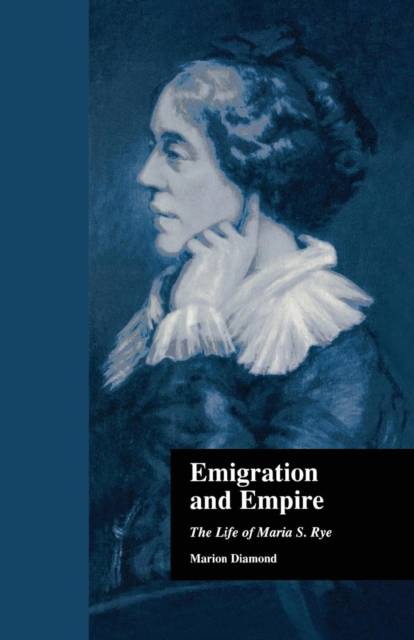
Description
Maria S. Rye, a woman motivated by both feminist and philanthropic ideals, devoted her life to the migration of women and girls out of England. This biography gives an account of Rye's activities from her early engagement with liberal feminism through her association with the Langham Place group in the 1850s, her work as a journalist and with the Society for Promoting Women's Employment, through to her efforts in women's and children's emigration Between 1861 and 1896, Maria S. Rye sent many hundreds of single women out to Australia, New Zealand and South Africa, and more than four thousand children to Canada, all with the promise of a better life in the British colonies than they could expect at home in England. Like many nineteenth century advocates of emigration, she saw it as a panacea for many social ills, taking people from impoverishment in the old world to the hope of better prospects in the new. Unlike other advocates, she linked this enthusiasm for emigration with the ideals of liberal feminism, arguing that women and girls should share the opportunities for advancement that the colonies offered to men and boys Rye played a central role in developing organizations to facilitate the migration of women and girls, starting with the Female Middle Class Emigration Society in 1861. After 1869 she concentrated on the migration of so-called gutter-children to Canada, where her pioneering efforts were followed by numerous other philanthropic associates, such as Barnardo This biography analyzes how feminism and philanthropy intertwined in her activities, and how her early concerns with the rights of women to economic opportunity came to be over-ridden by an authoritarian streak that led to the tragic excesses of her work in juvenile migration.
Spécifications
Parties prenantes
- Auteur(s) :
- Editeur:
Contenu
- Nombre de pages :
- 324
- Langue:
- Anglais
- Collection :
Caractéristiques
- EAN:
- 9781138968660
- Date de parution :
- 29-01-16
- Format:
- Livre broché
- Format numérique:
- Trade paperback (VS)
- Dimensions :
- 140 mm x 216 mm
- Poids :
- 376 g


Seulement chez Librairie Club
+ 216 points sur votre carte client de Librairie Club
Cadeau


Les avis
Nous publions uniquement les avis qui respectent les conditions requises. Consultez nos conditions pour les avis.