


- Retrait en 2 heures
- Assortiment impressionnant
- Paiement sécurisé
- Toujours un magasin près de chez vous
- Retrait en 2 heures
- Assortiment impressionnant
- Paiement sécurisé
- Toujours un magasin près de chez vous



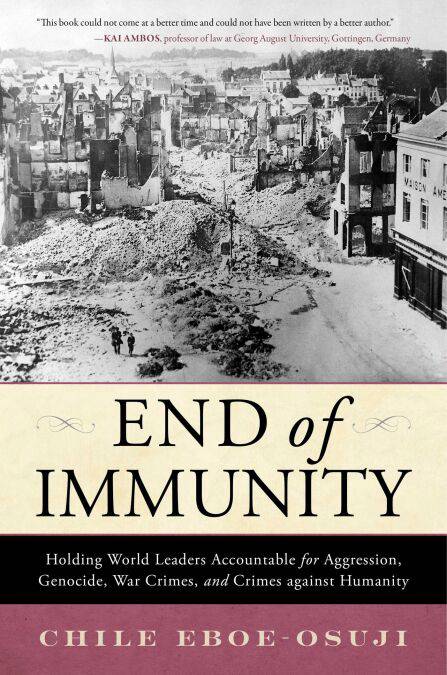
End of Immunity EBOOK
Holding World Leaders Accountable for Aggression, Genocide, War Crimes, and Crimes against Humanity
Chile Eboe-Osuji
Ebook | Anglais
25,71 €
+ 25 points
Format
Description
Russia’s invasion of Ukraine in 2022 has shown the world the critical importance of whether and how to punish heads of state, heads of government, and sundry strong men when accused of crimes of aggression, genocide, war crimes, and other crimes against humanity. In End of Immunity, former President of the International Criminal Court, Chile Eboe-Osuji, probes the history and theory of the concept of immunity for heads of state, underscoring tribunal achievements, pointing out gaps in the existing framework of accountability and the hypocrisies that produced them, and offering workable solutions to the loopholes that government leaders still use to escape consequences today.
Eboe-Osuji traces the development of international law from the pre-World War I era that left wars of aggression as the prerogative of sovereigns able to wage them through the peacetime conferences of the Hague at the turn of the 20th century, the momentous Article 227 of the Versailles Peace Treaty of 1919, which communicated the resolve of the Allies and Associated Powers to prosecute German Emperor and King of Prussia Kaiser Wilhelm II before an international tribunal, how the legal norms applied in the post-WWII Nuremberg trial transformed the norms of modern international law, how 1990’s Africa breathed new life into arguments against immunity for heads of state, and how modern-day Russia flouts those laws with Putin’s war of aggression on Ukraine.
Going as far back as the Middle Ages and the ancient doctrine of the divine right of kings, and concluding with a fresh new proposal for the ways in which international law can be shored up to prosecute those leaders who wage wars of aggression, Eboe-Osuji investigates the journey of international law’s rejection of immunity for anyone – including heads of state in particular – when they are suspected or accused of atrocities that international law has proscribed as crimes. The result is the definitive account of a profoundly vital principle for international relations and global humanity.
Eboe-Osuji traces the development of international law from the pre-World War I era that left wars of aggression as the prerogative of sovereigns able to wage them through the peacetime conferences of the Hague at the turn of the 20th century, the momentous Article 227 of the Versailles Peace Treaty of 1919, which communicated the resolve of the Allies and Associated Powers to prosecute German Emperor and King of Prussia Kaiser Wilhelm II before an international tribunal, how the legal norms applied in the post-WWII Nuremberg trial transformed the norms of modern international law, how 1990’s Africa breathed new life into arguments against immunity for heads of state, and how modern-day Russia flouts those laws with Putin’s war of aggression on Ukraine.
Going as far back as the Middle Ages and the ancient doctrine of the divine right of kings, and concluding with a fresh new proposal for the ways in which international law can be shored up to prosecute those leaders who wage wars of aggression, Eboe-Osuji investigates the journey of international law’s rejection of immunity for anyone – including heads of state in particular – when they are suspected or accused of atrocities that international law has proscribed as crimes. The result is the definitive account of a profoundly vital principle for international relations and global humanity.
Spécifications
Parties prenantes
- Auteur(s) :
- Editeur:
Contenu
- Nombre de pages :
- 408
- Langue:
- Anglais
Caractéristiques
- EAN:
- 9781633889910
- Date de parution :
- 14-10-24
- Format:
- Ebook
- Protection digitale:
- Adobe DRM
- Format numérique:
- ePub



Seulement chez Librairie Club
+ 25 points sur votre carte client de Librairie Club
Cadeau


Les avis
Nous publions uniquement les avis qui respectent les conditions requises. Consultez nos conditions pour les avis.