


- Retrait en 2 heures
- Assortiment impressionnant
- Paiement sécurisé
- Toujours un magasin près de chez vous
- Retrait en 2 heures
- Assortiment impressionnant
- Paiement sécurisé
- Toujours un magasin près de chez vous



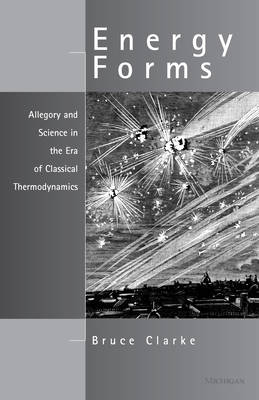
Energy Forms
Allegory and Science in the Era of Classical Thermodynamics
Bruce Clarke
Livre relié | Anglais
169,95 €
+ 339 points
Description
This book follows the interplay between allegory and physics in Europe from the inception of the laws of thermodynamics in the 1850s to the cultural acceptance of the theory of relativity in the 1920s. Bruce Clarke delves into the cultural poetics of this emergence, as well as using allegory theory to link the literature of that era to the consolidation of modern physics in England. In his examination of these correlating topics the author displays not only an impressive grasp on the scientific climate of that era, but also comprehensive knowledge of late nineteenth- and early twentieth-century literature.
The book begins with an overview of the interconnections between allegory in literature and allegory in science, then analyzes the interaction between energy and entropy and their personification in the literature of the times. Energy Forms draws on the writing of well-known literary and scientific authors including H. G. Wells, Camille Flammarion, Charles Howard Hinton and D. H. Lawrence, among others. The focus then shifts to the broad cultural tension between thermodynamic malaise and electromagnetic aspiration. Energy Forms uncovers the works of important but overlooked authors in the fields of science and literature and will appeal especially to those who are intrigued by interdisciplinary studies.
Bruce Clarke is Professor of English, Texas Tech University. He is the author of Dora Marsden and Early Modernism: Gender, Individualism, Science; Allegories of Writing: The Subject of Metamorphosis; and editor of The Body and the Text: Comparative Essays in Literature and Medicine.
The book begins with an overview of the interconnections between allegory in literature and allegory in science, then analyzes the interaction between energy and entropy and their personification in the literature of the times. Energy Forms draws on the writing of well-known literary and scientific authors including H. G. Wells, Camille Flammarion, Charles Howard Hinton and D. H. Lawrence, among others. The focus then shifts to the broad cultural tension between thermodynamic malaise and electromagnetic aspiration. Energy Forms uncovers the works of important but overlooked authors in the fields of science and literature and will appeal especially to those who are intrigued by interdisciplinary studies.
Bruce Clarke is Professor of English, Texas Tech University. He is the author of Dora Marsden and Early Modernism: Gender, Individualism, Science; Allegories of Writing: The Subject of Metamorphosis; and editor of The Body and the Text: Comparative Essays in Literature and Medicine.
Spécifications
Parties prenantes
- Auteur(s) :
- Editeur:
Contenu
- Nombre de pages :
- 288
- Langue:
- Anglais
Caractéristiques
- EAN:
- 9780472111749
- Date de parution :
- 08-11-01
- Format:
- Livre relié
- Format numérique:
- Genaaid
- Dimensions :
- 165 mm x 241 mm
- Poids :
- 635 g


Seulement chez Librairie Club
+ 339 points sur votre carte client de Librairie Club
Cadeau


Les avis
Nous publions uniquement les avis qui respectent les conditions requises. Consultez nos conditions pour les avis.