


- Retrait en 2 heures
- Assortiment impressionnant
- Paiement sécurisé
- Toujours un magasin près de chez vous
- Retrait en 2 heures
- Assortiment impressionnant
- Paiement sécurisé
- Toujours un magasin près de chez vous



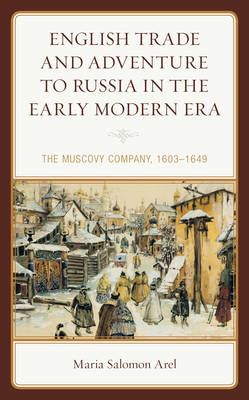
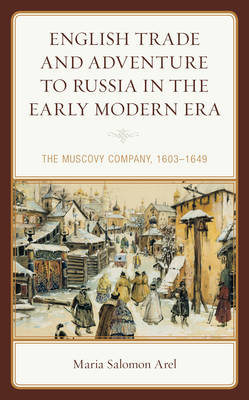
English Trade and Adventure to Russia in the Early Modern Era
The Muscovy Company, 1603-1649
Maria Salomon Arel
79,95 €
+ 159 points
Format
Description
In English Trade and Adventure to Russia in the Early Modern Era, Maria Salomon Arel revisits Anglo-Russian trade in first half of the seventeenth century. Drawing on largely neglected Russian and English sources, she reconstructs the history of the Muscovy Company in a period of expanding opportunities for foreigners in Russia and of tightening links between regional markets across the globe. In her strongly revisionist telling, the Company successfully rebuilt in the aftermath of the devastating Time of Troubles, securing its uniquely privileged position in the Russian market at the hands of a newly installed tsar and Romanov dynasty keen to revive the country's decimated economy through the stimulus of foreign trade. Meanwhile, on the London end of a trade clearly deemed relevant to commercial and shipping interests increasingly dependent on Russian naval stores and invested in the Russian re-export trades to and from the Mediterranean and Asia, the Company restructured its organization and finances with crucial royal support in furtherance of the 'public good' and early Stuart dynastic honor. As Arel documents, by the 1630s-40s, English trade to Russia was flourishing, as seen in the growing number of Muscovy Company men active all along the Moscow-Archangel route, their substantial commercial infrastructure, extensive supply networks among a broad swath of Russian merchants and traders, and prominent role in the exploitation of monopoly trades established to fill the tsar's coffers with specie. The picture drawn by Arel overturns a traditional narrative on the Russia trade that has relegated the English to the shadows, demonstrating the tenacity and continued development of their enterprise at the intersection of English commercial expansion, Russian economic growth, and advancing globalization processes. Taking the narrative even further, the book opens up new perspectives and research directions by pointing to an incipient link between the Russian and transatlantic markets, while shifting the lens on the Anglo-Dutch relationship in the Russia trade away from the time-worn dichotomy of cutthroat competition to a more nuanced understanding of mutual cooperation and business association between merchants on the ground, even in the face of commercial and territorial competition between nations.
Spécifications
Parties prenantes
- Auteur(s) :
- Editeur:
Contenu
- Nombre de pages :
- 362
- Langue:
- Anglais
- Collection :
Caractéristiques
- EAN:
- 9781498550253
- Date de parution :
- 04-03-22
- Format:
- Livre broché
- Format numérique:
- Trade paperback (VS)
- Dimensions :
- 152 mm x 229 mm
- Poids :
- 530 g


Seulement chez Librairie Club
+ 159 points sur votre carte client de Librairie Club
Cadeau


Les avis
Nous publions uniquement les avis qui respectent les conditions requises. Consultez nos conditions pour les avis.