


- Retrait en 2 heures
- Assortiment impressionnant
- Paiement sécurisé
- Toujours un magasin près de chez vous
- Retrait en 2 heures
- Assortiment impressionnant
- Paiement sécurisé
- Toujours un magasin près de chez vous



Description
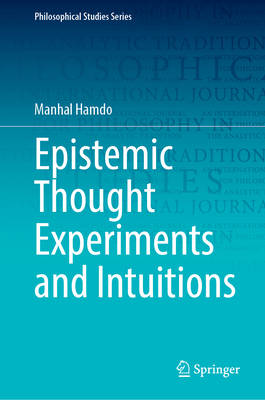
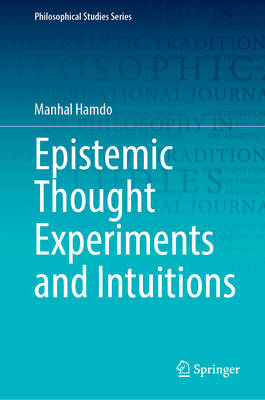
This work investigates intuitions' nature, demonstrating how philosophers can best use them in epistemology. First, the author considers several paradigmatic thought experiments in epistemology that depict the appeal to intuition. He then argues that the nature of thought experiment-generated intuitions is not best explained by an a priori Platonism. Second, the book instead develops and argues for a thin conception of epistemic intuitions. The account maintains that intuition is neither a priori nor a posteriori but multi-dimensional. It is an intentional but non-propositional mental state that is also non-conceptual and non-phenomenal in nature. Moreover, this state is individuated by its progenitor, namely, the relevant thought experiment. Third, the author provides an argument for the evidential status of intuitions based on the correct account of the nature of epistemic intuition. The suggestion is the fitting-ness approach: intuition alone has no epistemic status. Rather, intuition has evidentiary value as long as it fits well with other pieces into a whole, namely, the pertinent thought experiment. Finally, the book addresses the key challenges raised by supporters of anti-centrality, according to which philosophers do not regard intuition as central evidence in philosophy. To that end, the author responds to them, showing that they fail to affect the account of intuition developed in this book. This text appeals to students and researchers working in epistemology.
Spécifications
Parties prenantes
- Auteur(s) :
- Editeur:
Contenu
- Nombre de pages :
- 178
- Langue:
- Anglais
- Collection :
- Tome:
- n° 150
Caractéristiques
- EAN:
- 9783031334795
- Date de parution :
- 29-06-23
- Format:
- Livre relié
- Format numérique:
- Genaaid
- Dimensions :
- 156 mm x 234 mm
- Poids :
- 453 g


Seulement chez Librairie Club
+ 259 points sur votre carte client de Librairie Club
Cadeau

Cadeau


Les avis
Nous publions uniquement les avis qui respectent les conditions requises. Consultez nos conditions pour les avis.