


En raison d'une grève chez bpost, des retards de livraison peuvent survenir. Besoin de quelque chose en urgence ? Optez pour un retrait en magasin ou rendez-vous dans une Librairie Club à proximité.
- Retrait en 2 heures
- Assortiment impressionnant
- Paiement sécurisé
- Toujours un magasin près de chez vous
En raison d'une grève chez bpost, des retards de livraison peuvent survenir. Besoin de quelque chose en urgence ? Optez pour un retrait en magasin ou rendez-vous dans une Librairie Club à proximité.
- Retrait en 2 heures
- Assortiment impressionnant
- Paiement sécurisé
- Toujours un magasin près de chez vous


121,90 €
+ 243 points
Description
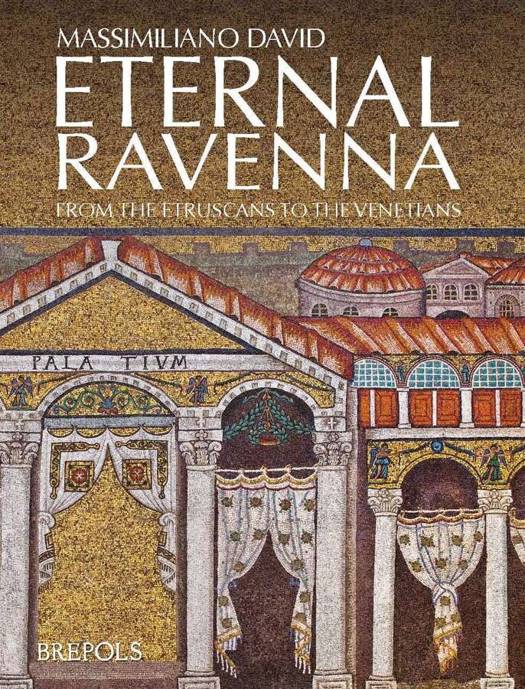
One of the most important cities in the Mediterranean, Ravenna still boasts a series of monuments that have been exceptionally well-preserved, and very often still have their original decorations, mosaics in particular. The great historian Arnaldo Momigliano was right when he said," When I want to understand Italian history, I catch a train and go to Ravenna." Indeed, with its capacity for self-preservation, the city is an outstanding example of town planning. It is still burdened, however, by common places or stereotype-like formulae that have survived until today as the Byzantium of Italy. This is a common, simplified definition that does not grasp the uniqueness and grandeur of the extraordinary Roman city of Honorius and Galla Placidia that experienced an important Byzantine period after Theodoric.For years there has been a vertiginous multiplication of specialised studies, albeit lacking in works, that offered a general overview whilst effectively explaining its main features. A combination of scientific rigour and clarity, this publication outlines the history and town planning of the city from its distant Etruscan origins up to the battle that in 1512 changed its destiny once and for all, when it became part of the pontifical dominion.The whole series of the lavish buildings that were constructed in late ancient times and their decorations (San Giovanni Evangelista, Santa Croce, the Arian cathedral of Santo Spirito, San Apollinare Nuovo, San Vitale and San Francesco), is studied here from a critical, but updated profile and set in the historical context that generated it and in the complex urban situation, that was originally a perfect balance between land and water but then became increasingly precarious.Countless new facts emerged as did much material that was little known or is published here for the first time. With this in mind, there was also a unique opportunity: the possibility to carry out a totally new photograph campaign, which was made possible together with the author thanks to the collaboration of the Archaeological Superintendency of Emilia Romagna, the Superintendency for Architectural and Landscape Heritage of Ravenna, and the Cultural Heritage Office of the Archiepiscopal Curia. What emerged is a Ravenna that is in many ways new, or at least radically renewed, with many surprises for even the most expert scholars.
Spécifications
Parties prenantes
- Auteur(s) :
- Editeur:
Contenu
- Nombre de pages :
- 288
- Langue:
- Anglais
Caractéristiques
- EAN:
- 9782503549415
- Date de parution :
- 30-09-13
- Format:
- Livre relié
- Format numérique:
- Genaaid
- Dimensions :
- 244 mm x 330 mm
- Poids :
- 2358 g


Seulement chez Librairie Club
+ 243 points sur votre carte client de Librairie Club
Cadeau


Les avis
Nous publions uniquement les avis qui respectent les conditions requises. Consultez nos conditions pour les avis.