


- Retrait en 2 heures
- Assortiment impressionnant
- Paiement sécurisé
- Toujours un magasin près de chez vous
- Retrait en 2 heures
- Assortiment impressionnant
- Paiement sécurisé
- Toujours un magasin près de chez vous



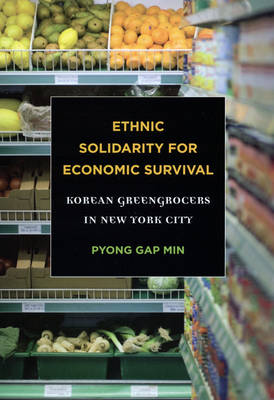
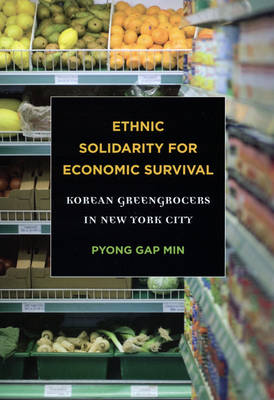
Ethnic Solidarity for Economic Survival
Korean Greengrocers in New York City
Pyong Gap Min
Livre broché | Anglais
59,45 €
+ 118 points
Description
Generations of immigrants have relied on small family businesses in their pursuit of the American dream. This entrepreneurial tradition remains highly visible among Korean immigrants in New York City, who have carved out a thriving business niche for themselves operating many of the city's small grocery stores and produce markets. But this success has come at a price, leading to dramatic, highly publicized conflicts between Koreans and other ethnic groups. In Ethnic Solidarity for Economic Survival, Pyong Gap Min takes Korean produce retailers as a case study to explore how involvement in ethnic businesses--especially where it collides with the economic interests of other ethnic groups--powerfully shapes the social, cultural, and economic unity of immigrant groups. Korean produce merchants, caught between white distributors, black customers, Hispanic employees, and assertive labor unions, provide a unique opportunity to study the formation of group solidarity in the face of inter-group conflicts. Ethnic Solidarity for Economic Survival draws on census and survey data, interviews with community leaders and merchants, and a review of ethnic newspaper articles to trace the growth and evolution of Korean collective action in response to challenges produce merchants received from both white suppliers and black customers. When Korean produce merchants first attempted to gain a foothold in the city's economy, they encountered pervasive discrimination from white wholesale suppliers at Hunts Point Market in the Bronx. In response, Korean merchants formed the Korean Produce Association (KPA), a business organization that gradually evolved into a powerful engine for promoting Korean interests. The KPA used boycotts, pickets, and group purchasing to effect enduring improvements in supplier-merchant relations. Pyong Gap Min returns to the racially charged events surrounding black boycotts of Korean stores in the 1990s, which were fueled by frustration among African Americans at a perceived economic invasion of their neighborhoods. The Korean community responded with rallies, political negotiations, and publicity campaigns of their own. The disappearance of such disputes in recent years has been accompanied by a corresponding reduction in Korean collective action, suggesting that ethnic unity is not inevitable but rather emerges, often as a form of self-defense, under certain contentious conditions. Solidarity, Min argues, is situational. This important new book charts a novel course in immigrant research by demonstrating how business conflicts can give rise to demonstrations of group solidarity. Ethnic Solidarity for Economic Survival is at once a sophisticated empirical analysis and a riveting collection of stories--about immigration, race, work, and the American dream.
Spécifications
Parties prenantes
- Auteur(s) :
- Editeur:
Contenu
- Nombre de pages :
- 209
- Langue:
- Anglais
Caractéristiques
- EAN:
- 9780871546418
- Date de parution :
- 04-01-11
- Format:
- Livre broché
- Format numérique:
- Trade paperback (VS)
- Dimensions :
- 147 mm x 224 mm
- Poids :
- 907 g


Seulement chez Librairie Club
+ 118 points sur votre carte client de Librairie Club
Cadeau


Les avis
Nous publions uniquement les avis qui respectent les conditions requises. Consultez nos conditions pour les avis.