


- Retrait en 2 heures
- Assortiment impressionnant
- Paiement sécurisé
- Toujours un magasin près de chez vous
- Retrait en 2 heures
- Assortiment impressionnant
- Paiement sécurisé
- Toujours un magasin près de chez vous




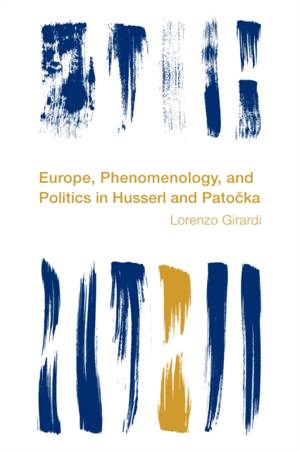
Europe, Phenomenology, and Politics in Husserl and Patocka
Lorenzo Girardi
169,95 €
+ 339 points
Description
Europe is often discussed in the context of crisis, usually economic or political. Less prominent these days is Europe's spiritual crisis; an important topic throughout the previous century. Various catastrophes put in doubt the rationalist principles on which Europe had based itself. The current relativist intellectual and political climate can still be seen as an expression of this. Rather than following attempts to counter this via the restoration of a supposedly European essence (often in terms of Christianity or rationalism), this book attempts to think the crisis through to its end and to articulate the truth which manifests itself in it.
The themes of this book - Europe, phenomenology and politics - share a concern with the crisis as the dissolution of the world, that is, the dissolution of a shared horizon of human existence. Among phenomenologists, Husserl and Patocka foremost have linked this problematic to reflections on the idea of Europe itself. They represent two distinct perspectives, corresponding to different historical situations. Nonetheless, what is presented here is not primarily the continuity between their thought and their historical circumstances, but rather the underexamined continuity between their phenomenology and their thought on Europe and politics.
Applying phenomenology to politics, Husserl's and Patocka's thought are used to assess the justification for and limits of liberal and agonistic political philosophy respectively. By analysing the concrete ways in which our world is structured experientially, the limits of the ideal of rational reconciliation are shown. An alternative conception of politics is developed on the basis of the breakdown of Europe's rationalist ideal, that is, on the basis of the truth which manifests itself in Europe's crisis, without lapsing into a relativism where anything goes. This leads to an agonistic conception of liberal democracy based on Patocka's phenomenological concept of problematicity.
Spécifications
Parties prenantes
- Auteur(s) :
- Editeur:
Contenu
- Nombre de pages :
- 226
- Langue:
- Anglais
- Collection :
Caractéristiques
- EAN:
- 9781538179222
- Date de parution :
- 27-09-2023
- Format:
- Livre relié
- Format numérique:
- Genaaid
- Dimensions :
- 152 mm x 229 mm
- Poids :
- 503 g


Seulement chez Librairie Club
+ 339 points sur votre carte client de Librairie Club
Cadeau


Les avis
Nous publions uniquement les avis qui respectent les conditions requises. Consultez nos conditions pour les avis.