


- Retrait en 2 heures
- Assortiment impressionnant
- Paiement sécurisé
- Toujours un magasin près de chez vous
- Retrait en 2 heures
- Assortiment impressionnant
- Paiement sécurisé
- Toujours un magasin près de chez vous



147,45 €
+ 294 points
Description
David Stronach OBE FSA (1931-2020) was a leading figure in the field of Iranian archaeology and founding Director of the British Institute of Persian Studies (BIPS). He left behind extensive archival records of his pioneering excavations in Iran containing a wealth of unpublished material, which is currently being digitised by BIPS.
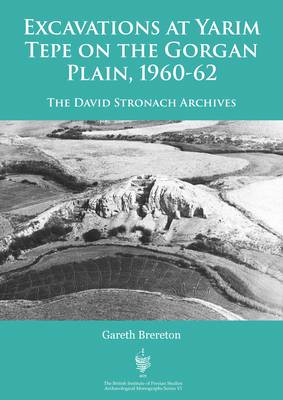
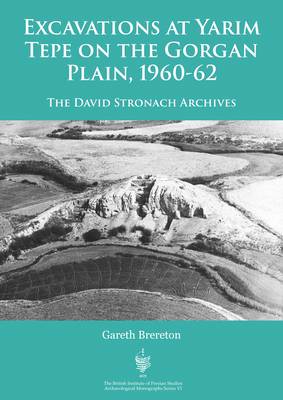
In 1960, during his initial appointment as Director of BIPS in Tehran, David led his first fieldwork project in Iran at the mound of Yarim Tepe on the Gorgan Plain, one of the most fertile regions of the country. At the time this region was relatively unexplored by archaeologists. The mound itself rises 20 m above the surrounding plain and lies on the bank of the Kara Su River, which had cut into the south face of the mound. This cut created a natural section from the top of the mound down to virgin soil, allowing David and his team to delineate an archaeological sequence that spanned the final Sasanian occupation of the mound, down to the initial Neolithic settlement, over just two field seasons in 1960 and 1962. A main objective of the project was to outline a pottery sequence for the site and collect samples for radiocarbon dating, to help establish a regional chronology for the Gorgan Plain. Unfortunately, the excavations at Yarim Tepe have remained unpublished. In light of new research generated by Iranian archaeologists currently working in north-eastern Iran, as well as current reappraisals of historical excavations in the region, it is essential that this previously unpublished corpus is made available to researchers.
Drawing on Stronach's extensive archives, this volume collates the available fieldnotes, photographs, archaeological drawings, ceramic data and radiocarbon dates to produce a final excavation report. An introductory section gives an account of Stronach's early career and his role as founding Director of BIPS as context for his first excavation in Iran at Yarim Tepe. This is followed by an examination of the source material, field methods and stratigraphy, as well as a general discussion of the site and the surrounding region. Separate chapters present the excavation results for the initial Neolithic settlement; the reoccupation of the mound during the Late Chalcolithic period; the transition to the Bronze Age; the abandonment of the mound and its resettlement during the Iron Age; followed by the final Parthian, Sasanian and Islamic periods of occupation. Each chapter is accompanied by illustrations including original excavation photographs; contemporary object photographs; as well as redrawn archaeological plans and sections. A concluding chapter provides a summary of each major occupation phase accompanied by an evaluation of the ceramic assemblage in light of material from other sites in the region and available radiocarbon dates. From this, a revised chronological sequence for the mound is proposed. It is anticipated that David Stronach's excavations at Yarim Tepe, as presented in this volume, will further our understanding of this important archaeological site, the history of its excavation, and its contribution to the broader archaeology of the region as a whole.
In 1960, during his initial appointment as Director of BIPS in Tehran, David led his first fieldwork project in Iran at the mound of Yarim Tepe on the Gorgan Plain, one of the most fertile regions of the country. At the time this region was relatively unexplored by archaeologists. The mound itself rises 20 m above the surrounding plain and lies on the bank of the Kara Su River, which had cut into the south face of the mound. This cut created a natural section from the top of the mound down to virgin soil, allowing David and his team to delineate an archaeological sequence that spanned the final Sasanian occupation of the mound, down to the initial Neolithic settlement, over just two field seasons in 1960 and 1962. A main objective of the project was to outline a pottery sequence for the site and collect samples for radiocarbon dating, to help establish a regional chronology for the Gorgan Plain. Unfortunately, the excavations at Yarim Tepe have remained unpublished. In light of new research generated by Iranian archaeologists currently working in north-eastern Iran, as well as current reappraisals of historical excavations in the region, it is essential that this previously unpublished corpus is made available to researchers.
Drawing on Stronach's extensive archives, this volume collates the available fieldnotes, photographs, archaeological drawings, ceramic data and radiocarbon dates to produce a final excavation report. An introductory section gives an account of Stronach's early career and his role as founding Director of BIPS as context for his first excavation in Iran at Yarim Tepe. This is followed by an examination of the source material, field methods and stratigraphy, as well as a general discussion of the site and the surrounding region. Separate chapters present the excavation results for the initial Neolithic settlement; the reoccupation of the mound during the Late Chalcolithic period; the transition to the Bronze Age; the abandonment of the mound and its resettlement during the Iron Age; followed by the final Parthian, Sasanian and Islamic periods of occupation. Each chapter is accompanied by illustrations including original excavation photographs; contemporary object photographs; as well as redrawn archaeological plans and sections. A concluding chapter provides a summary of each major occupation phase accompanied by an evaluation of the ceramic assemblage in light of material from other sites in the region and available radiocarbon dates. From this, a revised chronological sequence for the mound is proposed. It is anticipated that David Stronach's excavations at Yarim Tepe, as presented in this volume, will further our understanding of this important archaeological site, the history of its excavation, and its contribution to the broader archaeology of the region as a whole.
Spécifications
Parties prenantes
- Auteur(s) :
- Editeur:
Contenu
- Nombre de pages :
- 256
- Langue:
- Anglais
- Collection :
Caractéristiques
- EAN:
- 9798888572894
- Date de parution :
- 18-12-26
- Format:
- Livre broché
- Format numérique:
- Trade paperback (VS)
- Dimensions :
- 211 mm x 297 mm


Seulement chez Librairie Club
+ 294 points sur votre carte client de Librairie Club
Cadeau


Les avis
Nous publions uniquement les avis qui respectent les conditions requises. Consultez nos conditions pour les avis.