


- Retrait en 2 heures
- Assortiment impressionnant
- Paiement sécurisé
- Toujours un magasin près de chez vous
- Retrait en 2 heures
- Assortiment impressionnant
- Paiement sécurisé
- Toujours un magasin près de chez vous



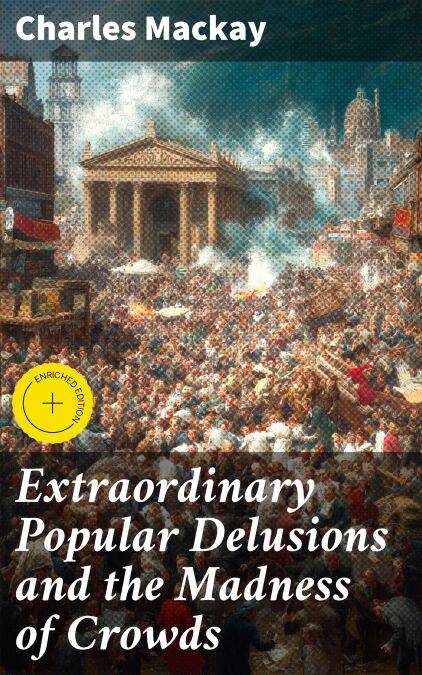
Extraordinary Popular Delusions and the Madness of Crowds EBOOK
Enriched edition. Vol.1-3
Charles Mackay
Ebook | Anglais
0,49 €
0,99 €
Format
Description
In 'Extraordinary Popular Delusions and the Madness of Crowds,' Charles Mackay delves into the psychological phenomena that can lead to widespread irrational behavior. This seminal work, first published in 1841, explores various historical occurrences of mass hysteria, financial bubbles, and social fads, revealing how collective psychology often eclipses individual judgment. Infused with Mackay's engaging prose and keen observational skill, the book employs a blend of anecdotal narratives and analytical commentary, situating it within the context of 19th-century socio-economic upheaval. Charles Mackay, a Scottish journalist and author, was deeply influenced by the financial tumult of his time, particularly the South Sea Bubble and similar panics. His thorough research and passion for public discourse allowed him to illuminate the recurring patterns of human behavior regarding speculation and enthusiasm. Mackay's background in journalism, along with his interest in social phenomena, informed his insights into the volatility of human emotions when compounded by group dynamics, contributing to the book's lasting impact. 'Extraordinary Popular Delusions and the Madness of Crowds' is essential reading for anyone seeking to understand not only the historical context of mass behavior but also its contemporary relevance. Mackay's analysis remains profoundly insightful, offering a lens through which we can examine modern phenomena such as social media trends and market fluctuations. For students of history, psychology, and economics, this work is invaluable, urging readers to consider the implications of human behavior in collective scenarios.
In this enriched edition, we have carefully created added value for your reading experience:
- A succinct Introduction situates the work's timeless appeal and themes.
- The Synopsis outlines the central plot, highlighting key developments without spoiling critical twists.
- A detailed Historical Context immerses you in the era's events and influences that shaped the writing.
- A thorough Analysis dissects symbols, motifs, and character arcs to unearth underlying meanings.
- Reflection questions prompt you to engage personally with the work's messages, connecting them to modern life.
- Hand‐picked Memorable Quotes shine a spotlight on moments of literary brilliance.
- Interactive footnotes clarify unusual references, historical allusions, and archaic phrases for an effortless, more informed read.
In this enriched edition, we have carefully created added value for your reading experience:
- A succinct Introduction situates the work's timeless appeal and themes.
- The Synopsis outlines the central plot, highlighting key developments without spoiling critical twists.
- A detailed Historical Context immerses you in the era's events and influences that shaped the writing.
- A thorough Analysis dissects symbols, motifs, and character arcs to unearth underlying meanings.
- Reflection questions prompt you to engage personally with the work's messages, connecting them to modern life.
- Hand‐picked Memorable Quotes shine a spotlight on moments of literary brilliance.
- Interactive footnotes clarify unusual references, historical allusions, and archaic phrases for an effortless, more informed read.
Spécifications
Parties prenantes
- Auteur(s) :
- Editeur:
Contenu
- Nombre de pages :
- 658
- Langue:
- Anglais
Caractéristiques
- EAN:
- 8596547771821
- Date de parution :
- 07-12-23
- Format:
- Ebook
- Protection digitale:
- Digital watermarking
- Format numérique:
- ePub



Seulement chez Librairie Club
Cadeau


Les avis
Nous publions uniquement les avis qui respectent les conditions requises. Consultez nos conditions pour les avis.