En raison d'une grève chez bpost, des retards de livraison peuvent survenir. Besoin de quelque chose en urgence ? Optez pour un retrait en magasin ou rendez-vous dans une Librairie Club à proximité.
  •  Retrait en 2 heures
  •  Assortiment impressionnant
  •  Paiement sécurisé
  •  Toujours un magasin près de chez vous

En raison d'une grève chez bpost, des retards de livraison peuvent survenir. Besoin de quelque chose en urgence ? Optez pour un retrait en magasin ou rendez-vous dans une Librairie Club à proximité.
  •  Retrait en 2 heures
  •  Assortiment impressionnant
  •  Paiement sécurisé
  •  Toujours un magasin près de chez vous

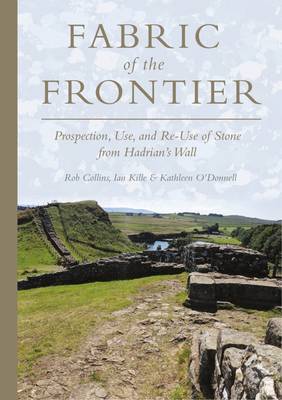
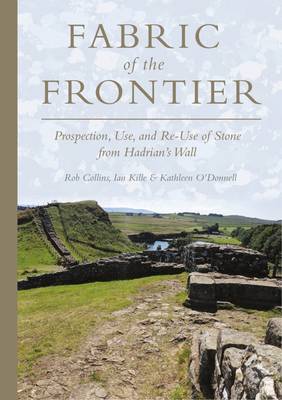
Fabric of the Frontier

Prospection, Use, and Re-Use of Stone from Hadrian's Wall

Rob Collins, Ian Kille, Kathleen O'Donnell
Livre relié | Anglais
83,95 €
Livraison 1 à 2 semaines
Passer une commande en un clic
Payer en toute sécurité
Livraison en Belgique: 3,99 €
Livraison en magasin gratuite

Description

What is Hadrian's Wall made of, where did this material come from and how has it been reused in other buildings in the communities that emerged in the centuries after the Roman Empire? By studying the fabric of Hadrian's Wall using a geological approach combined with archaeological methods, is it possible to refine our answers to these questions? This study describes how the relationship between the geology of the Wall's landscape and its fabric may be used to further understand the Wall and presents a significant set of new geological and archaeological data on the Wall's stones from across the length of the Wall.

This data set has been collected in two complementary ways. First as a citizen-science project, where volunteers from local communities were trained to visually characterise sandstones and resulting in data collecting on large numbers of the Wall's stones along the length of the Wall. Secondly, analytical research was used to gather in scientific data for a selected sets of rocks and stones. Geochemical data was captured using an X-ray fluorescence spectrometer, and petrographic observations made using a petrographic microscope and thin sections.The combined methods provide a framework for geological analysis of the Wall supported by robust data. It builds on earlier work on Roman quarrying and stone preparation highlighting not only stone sources, but the criteria for choosing stone, stone preparation methods, and the implied routes to the Wall. At the heart of this study lies the ability to uniquely identify different sandstone types. Geological methods used to achieve this are explored, as are the ways in which the sandstones form. This highlights both the possibilities and limits of this approach.

Spécifications

Parties prenantes

Auteur(s) :
Editeur:

Contenu

Nombre de pages :
184
Langue:
Anglais

Caractéristiques

EAN:
9781789259506
Date de parution :
30-06-23
Format:
Livre relié
Format numérique:
Genaaid
Dimensions :
211 mm x 297 mm
Poids :
960 g
Librairie Club

Seulement chez Librairie Club

Cadeau

Gagnez le double de points

sur nos best-sellers
Cadeau
Points doublés
Standaard Boekhandel

Les avis

Nous publions uniquement les avis qui respectent les conditions requises. Consultez nos conditions pour les avis.