


- Retrait en 2 heures
- Assortiment impressionnant
- Paiement sécurisé
- Toujours un magasin près de chez vous
- Retrait en 2 heures
- Assortiment impressionnant
- Paiement sécurisé
- Toujours un magasin près de chez vous



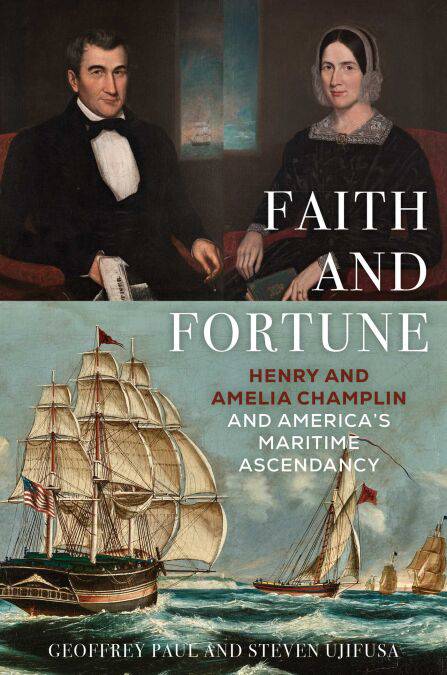
Faith and Fortune EBOOK
Henry and Amelia Champlin and America's Maritime Ascendancy
Geoffrey Paul, Steven Ujifusa
Ebook | Anglais
33,54 €
+ 33 points
Description
Faith and Fortune is a history of the United States of America between 1780 and 1880. Using the love story of Captain Henry Champlin and his wife Amelia as the narrative vehicle, this book illuminates a remarkable yet forgotten story of the transatlantic packet ships that sailed between New York and London. These large, swift moving vessels, built to endure the harsh North Atlantic, transported raw cotton, finished textiles, mail, artwork, bills of exchange, and gold bullion in their holds; and immigrants and wealthy travelers in their passenger quarters. The narrative begins with the births of Henry and Amelia Champlin in the Connecticut shipbuilding town of Pettipaug (renamed Essex in 1823), and continues through the War of 1812, the construction and vast economic impact of the Erie Canal, the establishment of regularly-scheduled shipping service between New York and Great Britain, the Champlins’ family life in Essex and New York, the development of the transatlantic steamship, the turmoil of Civil War, and the decline of the American merchant marine (and seafaring families like the Champlins) during the Gilded Age. The story is a window into so much of American history: small-town New England life; the growth of New York City; the Second Great Awakening; American architecture and material culture; advances in shipbuilding and technology; mass-immigration from Ireland during the Potato Famine; slavery and abolitionism; the temperance movement; relations between the young United States, France, and Great Britain; and the role of women in the Early Republic/Mid-Victorian eras. Faith and Fortune is a compelling, moving story of the young United States that appeals to anyone interested in American cultural and economic history.
Spécifications
Parties prenantes
- Auteur(s) :
- Editeur:
Contenu
- Nombre de pages :
- 416
- Langue:
- Anglais
Caractéristiques
- EAN:
- 9781493098811
- Date de parution :
- 16-11-26
- Format:
- Ebook
- Protection digitale:
- Adobe DRM
- Format numérique:
- ePub



Seulement chez Librairie Club
+ 33 points sur votre carte client de Librairie Club
Cadeau


Les avis
Nous publions uniquement les avis qui respectent les conditions requises. Consultez nos conditions pour les avis.