


En raison d'une grève chez bpost, des retards de livraison peuvent survenir. Besoin de quelque chose en urgence ? Optez pour un retrait en magasin ou rendez-vous dans une Librairie Club à proximité.
- Retrait en 2 heures
- Assortiment impressionnant
- Paiement sécurisé
- Toujours un magasin près de chez vous
En raison d'une grève chez bpost, des retards de livraison peuvent survenir. Besoin de quelque chose en urgence ? Optez pour un retrait en magasin ou rendez-vous dans une Librairie Club à proximité.
- Retrait en 2 heures
- Assortiment impressionnant
- Paiement sécurisé
- Toujours un magasin près de chez vous



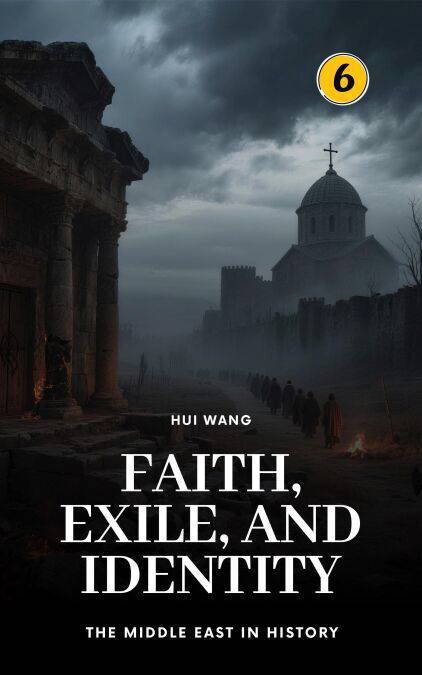
Faith, Exile, and Identity: The Middle East in History EBOOK
The Middle East in History, #6
Hui Wang
6,99 €
Description
Faith, Exile, and Identity: The Middle East in History, is my attempt to stitch into one long narrative a story that is usually told in fragments. It opens with Abraham and Moses and moves forward through the age of the Maccabees to the Roman siege and destruction of Jerusalem under Titus. From there I follow the consequences of the Temple's fall — the destruction of the Second Temple in 70 CE — and trace how Jewish life, ritual, and memory endured through exile, imperial pressure, and displacement. These early chapters examine how practices and stories—whether law, liturgy, or festival—kept a people intact, and how moments like Hanukkah carried meanings far deeper than a simple holiday.
The narrative then turns to the rise of Christianity and the world that shaped it. Jesus of Nazareth comes into view in the age of Augustus (his public ministry later unfolded under Tiberius), and Paul takes the message well beyond Judea, so that the cross becomes more than a symbol of suffering: it becomes a force that reshapes history. I follow that road from the persecutions of the late Roman empire under Diocletian to the new political status Christianity achieved under Constantine, and from the claim of Peter's legacy in Rome to the long history that culminated in the Great Schism. This section shows how a once-marginal belief moved into the center of imperial power and went on to divide the Christian world.
As power consolidated, conflict intensified. The Crusades enter through the calls and ambitions of figures such as Urban II and later papal leaders like Innocent III, and through Muslim commanders such as Saladin, revealing how faith and violence became tightly entwined. The story then turns darker: the Black Death's arrival in Europe, the ensuing waves of fear and penitence, and the persecutions that followed. These chapters show how plague reshaped societies, hardened religious tensions, and left cultural and psychological scars that lasted for centuries.
From that fractured medieval world modern Europe gradually emerged. I trace the thread from entrenched prejudice into cultural memory—through figures like Shakespeare's Shylock—and then onward into revolution, questions of citizenship, and the reach of empire under figures like Napoleon. These chapters explain how Jews moved, unevenly and painfully, from exclusion toward legal emancipation, and why that movement was never straightforward.
The final part of the book follows the birth of modern Jewish thought and political action. Moses Mendelssohn opens the door to the Jewish Enlightenment; Leon Pinsker confronts the limits of assimilation; and Theodor Herzl steps onto the stage in Basel with a bold, risky political vision. I wrote these chapters to show how ideas, identity, and history converged into a movement that would reshape both the Middle East and the modern world.
Spécifications
Parties prenantes
- Auteur(s) :
- Editeur:
Contenu
- Langue:
- Anglais
- Collection :
Caractéristiques
- EAN:
- 9789190115848
- Date de parution :
- 26-12-25
- Format:
- Ebook
- Protection digitale:
- /
- Format numérique:
- ePub


Seulement chez Librairie Club
Cadeau


Les avis
Nous publions uniquement les avis qui respectent les conditions requises. Consultez nos conditions pour les avis.