


- Retrait en 2 heures
- Assortiment impressionnant
- Paiement sécurisé
- Toujours un magasin près de chez vous
- Retrait en 2 heures
- Assortiment impressionnant
- Paiement sécurisé
- Toujours un magasin près de chez vous



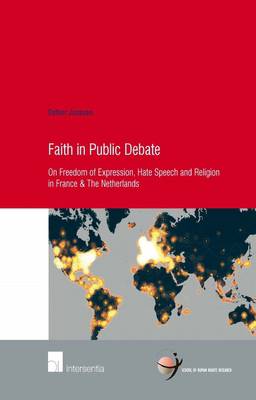
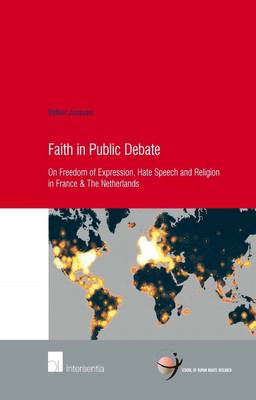
Faith in Public Debate
On Freedom of Expression, Hate Speech and Religion in France & the Netherlands Volume 68
Esther Janssen
117,00 €
+ 234 points
Description
Should a politician be free to fiercely attack the religion of a sector of the population? Should he be allowed to strongly reject the culture of a particular minority group? Should religious adherents be allowed to advocate the transition from a democratic to a theocratic state? Should a satirical magazine be free to mock religious figures and practices? These sort of questions concern the place of faith in public debate and continue to dominate public discussion that has been fuelled by a series of events, including the terrorist attacks in New York, Madrid and London; the assassination of Dutch film director Theo van Gogh; the affair of the Danish Cartoons; the prosecution of Dutch politician Geert Wilders for his statements on Islam and Muslims; and the terrorist attack on French satirical magazine Charlie Hebdo in Paris.The overarching question triggered by these events concerns the relationship between freedom of expression and the regulation of 'hate speech'; which forms of hate speech should the state prohibit, on what grounds and by which means? Notably, the restriction of hate speech uttered in the context of the public debate about multiculturalism, immigration, integration and Islam, and of religious fundamentalism has become a topic of lively discussion.This research constitutes the first international comparative study that provides a profound analysis of the law on hate speech in France and the Netherlands and under European and international law. It thoroughly examines the national legislation, its drafting history, policy and other legal documents and case law including famous legal cases against Dutch politician Geert Wilders, French politician Jean-Marie Le Pen and le Front National, French comedian Dieudonne and satirical magazine Charlie Hebdo. It also makes reference to the most recent international hate speech literature and discusses its key issues. This book can, thereby, form a source of inspiration for anyone interested or involved in the regulation of hate speech: academics; legislators; judges; prosecutors; politicians; interested citizens; and involved NGOs and can contribute to the 'faith in public debate', by elucidating its possible boundaries.
Spécifications
Parties prenantes
- Auteur(s) :
- Editeur:
Contenu
- Nombre de pages :
- 638
- Langue:
- Anglais
- Collection :
Caractéristiques
- EAN:
- 9781780683096
- Date de parution :
- 10-04-2015
- Format:
- Livre broché
- Format numérique:
- Trade paperback (VS)
- Dimensions :
- 170 mm x 240 mm
- Poids :
- 1133 g


Seulement chez Librairie Club
+ 234 points sur votre carte client de Librairie Club
Cadeau


Les avis
Nous publions uniquement les avis qui respectent les conditions requises. Consultez nos conditions pour les avis.