


- Retrait en 2 heures
- Assortiment impressionnant
- Paiement sécurisé
- Toujours un magasin près de chez vous
- Retrait en 2 heures
- Assortiment impressionnant
- Paiement sécurisé
- Toujours un magasin près de chez vous



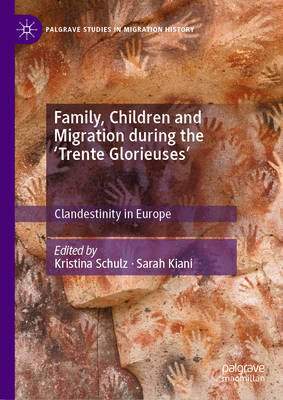
Family, Children and Migration During the 'Trente Glorieuses'
Clandestinity in Europe
151,95 €
+ 303 points
Description
This book provides a unique perspective on migration throughout Western Europe after the Second World War by exploring the complex histories of migrant children and families under the conditions of a restrictive migration regime. By historicising what 'family', 'migration', or 'childhood' meant in specific historical moments and places, this collection examines the impact that intra-European population mobilisation had on migrants between the 1950s and early 1990s. While previous research has focused on the many legal, economic, and diplomatic aspects of European migration, this book sheds light on the social situations, strategies, and experiences of so-called 'guest workers', particularly in relation to their families. Due to official archives revealing little about the lives of children who lived, sometimes for years, clandestinely, in their host countries, there is a need for a more nuanced approach to understanding the perspectives of migrating families in the mid-twentieth century. The contributions in this book bring together research from diverse fields, such as oral history, the sociology of mobilisation, social history of migration, social justice, gender studies, and transnationalism. On various levels (from the local to the international), they explore and contextualise the strategies which migrant families adopted to help deal with the hesitation of Western European nation states to grant the right of family reunification to labour migrants. Their analysis allows to establish a comprehensive and comparative overview about the multiple social situations that shape the live of migrant families, including access to schooling, health care, or the legal system.
Spécifications
Parties prenantes
- Editeur:
Contenu
- Nombre de pages :
- 263
- Langue:
- Anglais
- Collection :
Caractéristiques
- EAN:
- 9783032236630
- Date de parution :
- 08-07-2026
- Format:
- Livre relié
- Format numérique:
- Genaaid
- Dimensions :
- 148 mm x 210 mm

Seulement chez Librairie Club
+ 303 points sur votre carte client de Librairie Club
Cadeau


Les avis
Nous publions uniquement les avis qui respectent les conditions requises. Consultez nos conditions pour les avis.